Hida Takayama in Gifu Prefecture, near the heart of mainland Japan, is a world-renowned destination that draws visitors from around the globe. Just a few stops north, however, the atmosphere shifts. The crowds fade, and the pace of life slows down. This is Hida Furukawa, a small town nestled in the mountains. Here, instead of scenery staged for tourists, you’ll find something different: everyday life, unfolding just as it has ever been.
A Town of Carp
“Fish, fish!”
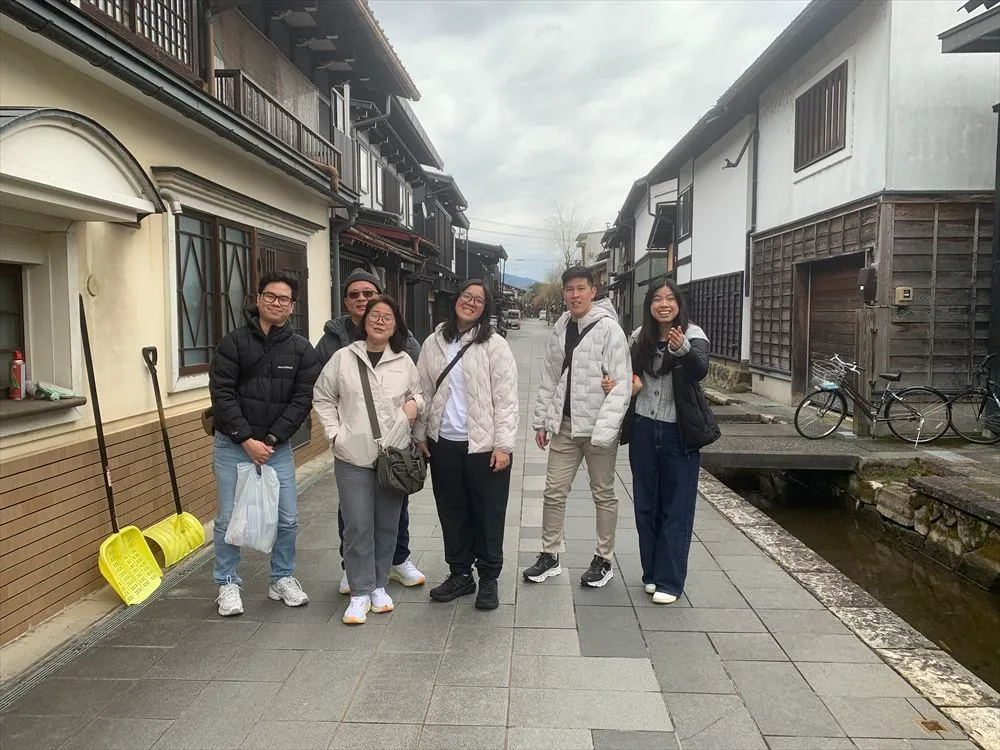
I see a group of overseas travelers who keep stopping here and there, taking photos. They line up, pose for pictures, walk a little farther, then stop again. Feeling curious, I ask them what they’re doing.
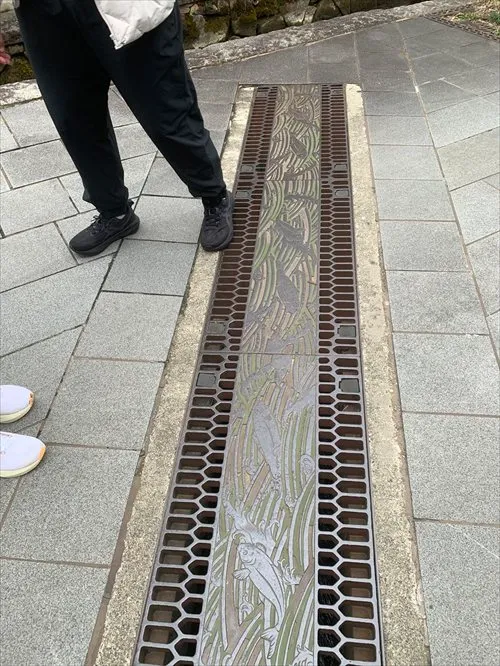
“Fish! Look, there’s one here, and another over there!” They point to carp designs on manhole covers and paving stones. It seems they’ve been spotting these hidden fish around town, turning it into a kind of treasure hunt.
“Where are you from?” I asked.
“The Philippines.”
They look like they’re having so much fun. “Mind if I take a photo of you all?”
“Sure! And you should join us!”
One of my first impressions of Hida Furukawa was the surprising closeness between visitors and the town.
Close to the Mountains, Quiet at Heart
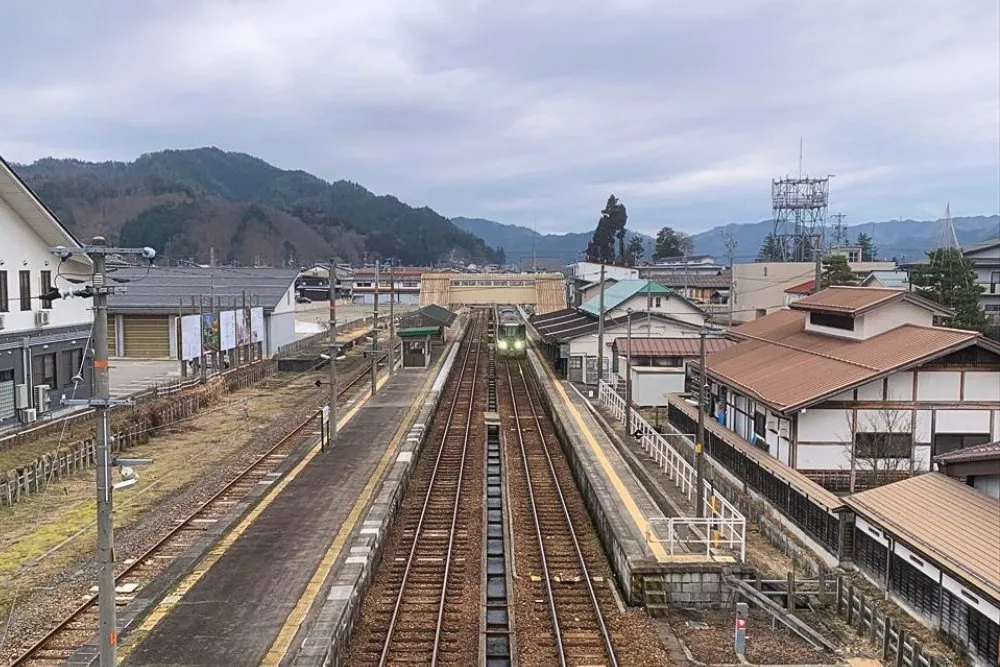
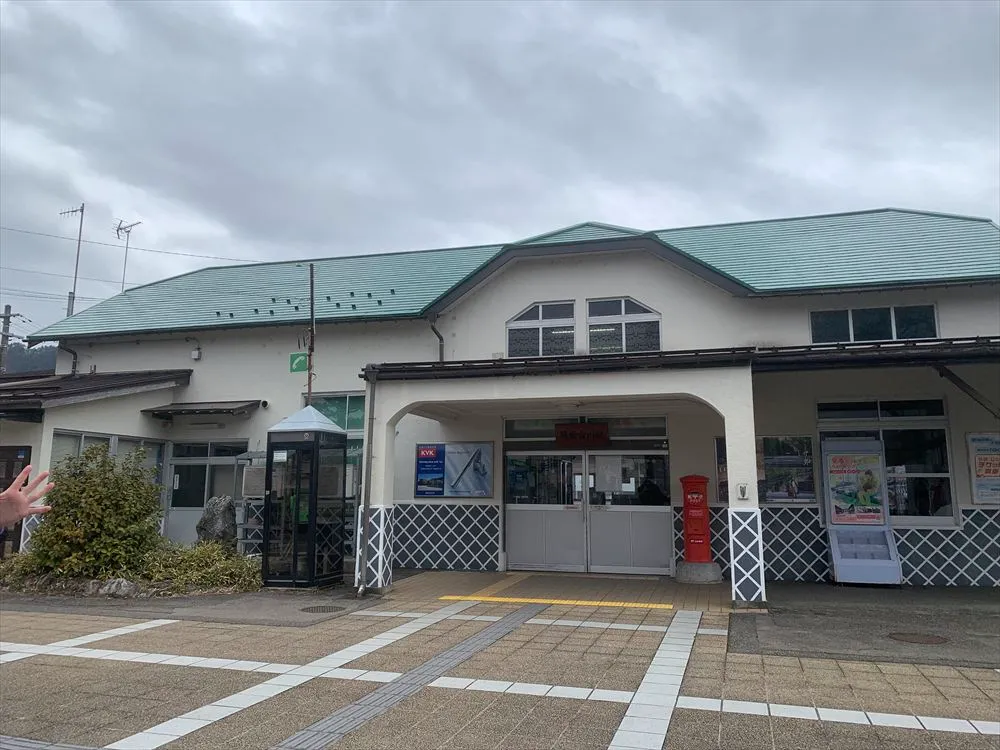
When I stepped off the train at Hida Furukawa Station, what struck me first was how close the mountains felt, and how quiet everything was. Just a 15-minute train ride from the popular destination of Takayama, the number of people drops noticeably.
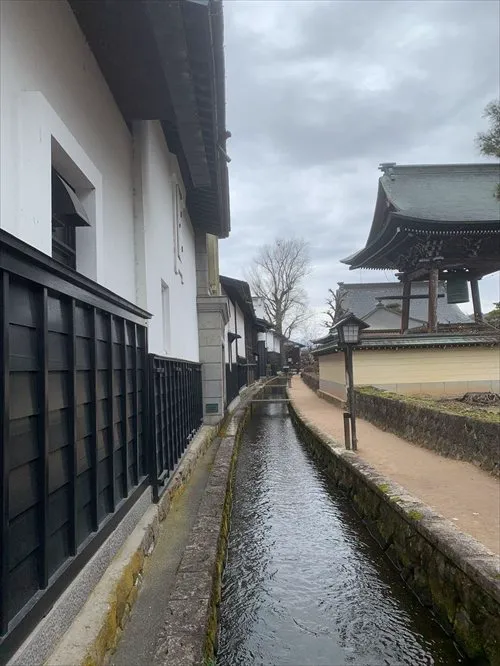
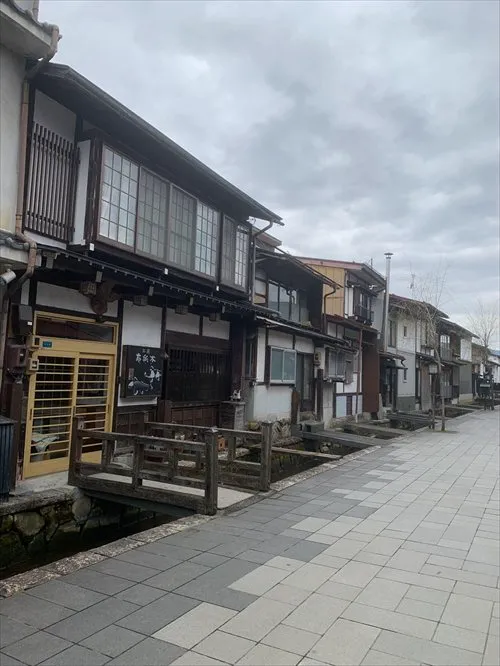
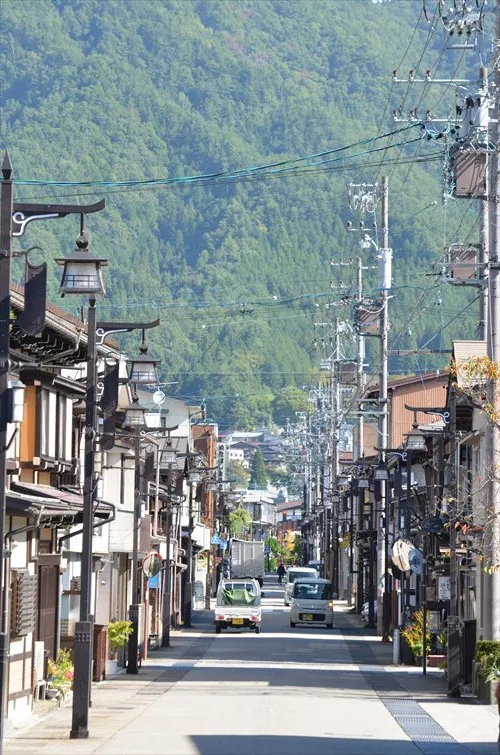
The town is home to beautiful sights, such as white-walled storehouses and canals where carp glide through the water. But more than anything, what stayed with me was the sense of everyday life continuing quietly, not for show, but simply as it is.
A Castle Town by Design
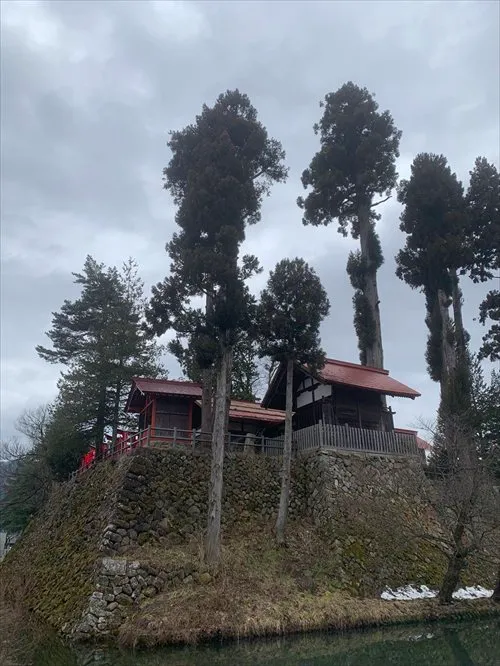
Hida Furukawa developed as a castle town around Masujima Castle. Built in the 16th century by the warlord Kanamori Nagachika as a base for governing Hida Province, Masujima Castle was a “hirajiro,” or flatland castle. The town was carefully planned, with residential areas for samurai and townspeople separated by a river. This layout is said to be characteristic of the Kanamori clan’s approach to town planning, also seen in their nearby stronghold, Takayama Castle.
A walk through the town gradually reveals traces of this history —orderly blocks, streets that follow canals, and a layout shaped by daily life rather than tourism.
Masujima Castle Ruins (with remains of stone turret base and moat)
White Walls and Carp-Filled Canals
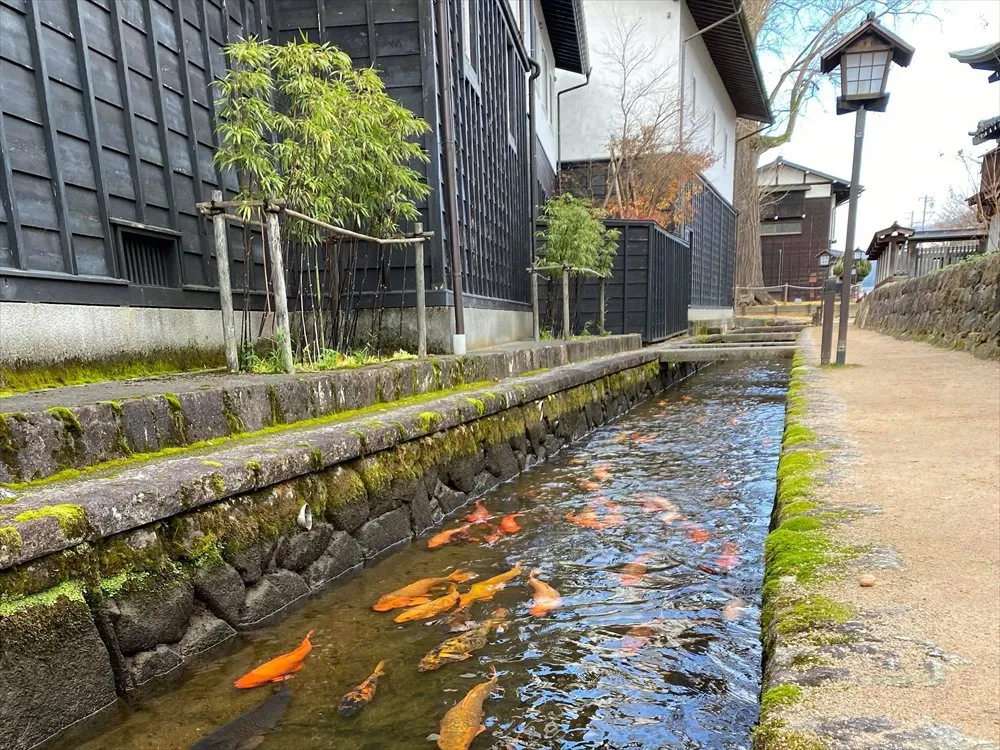
Carp glide gently through the waters of the Seto River, lined in white-walled storehouses, not a staged attraction, but simply part of everyday life here.
In winter, local residents work together to move the carp to a nearby pond, then return the fish to the river each spring.
A Local Deli
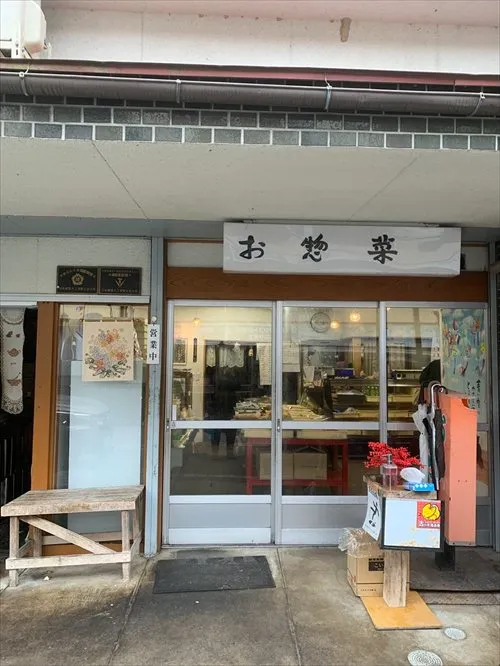
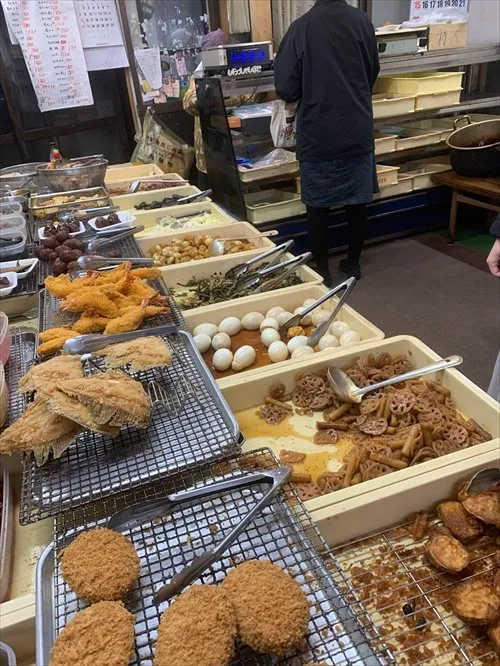
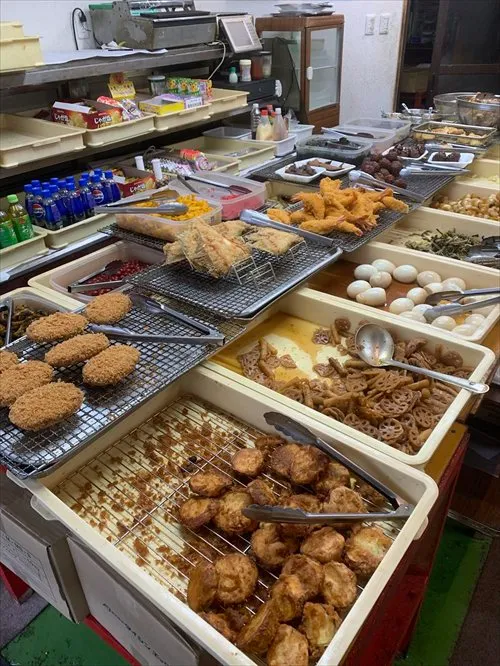
As I walk along the street, a small shop catches my eye—Okazuya Yamamoto. For residents, this local deli is part of their daily routine. Beneath its unassuming sign, the shop is filled with homestyle dishes. Customers move around the shop with takeaway containers in hand, picking and choosing from trays, pots, and plates.
It’s a popular spot, often crowded around lunchtime and in the early evening.
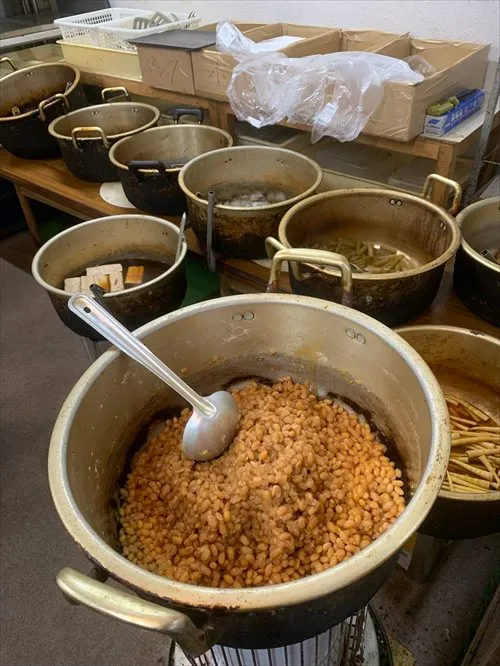
I’m told their “kara-age” (Japanese-style fried chicken) is the most popular item, so I pick some up. My tray fills up with simmered beans, braised kabocha squash, and a local specialty called “komo-dofu.” Everything looks delicious, but I keep my choices to what I can finish.
Komo-dofu is tofu wrapped in straw and gently boiled. Tiny air pockets form on its surface, allowing it to absorb the flavor of the broth. Each bite releases a delightful burst of savory umami.
Local Sake
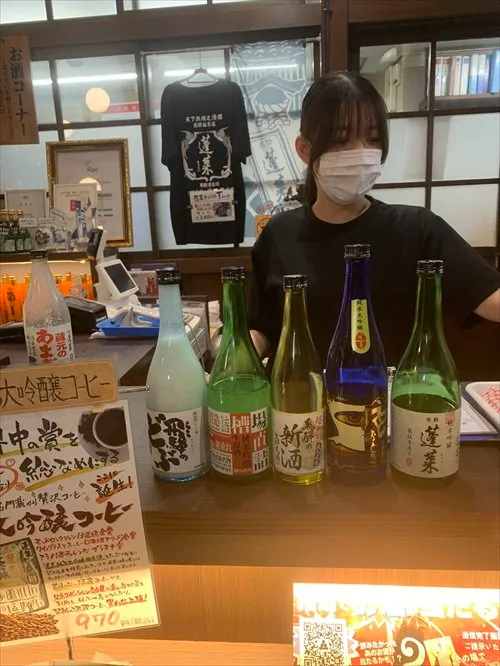
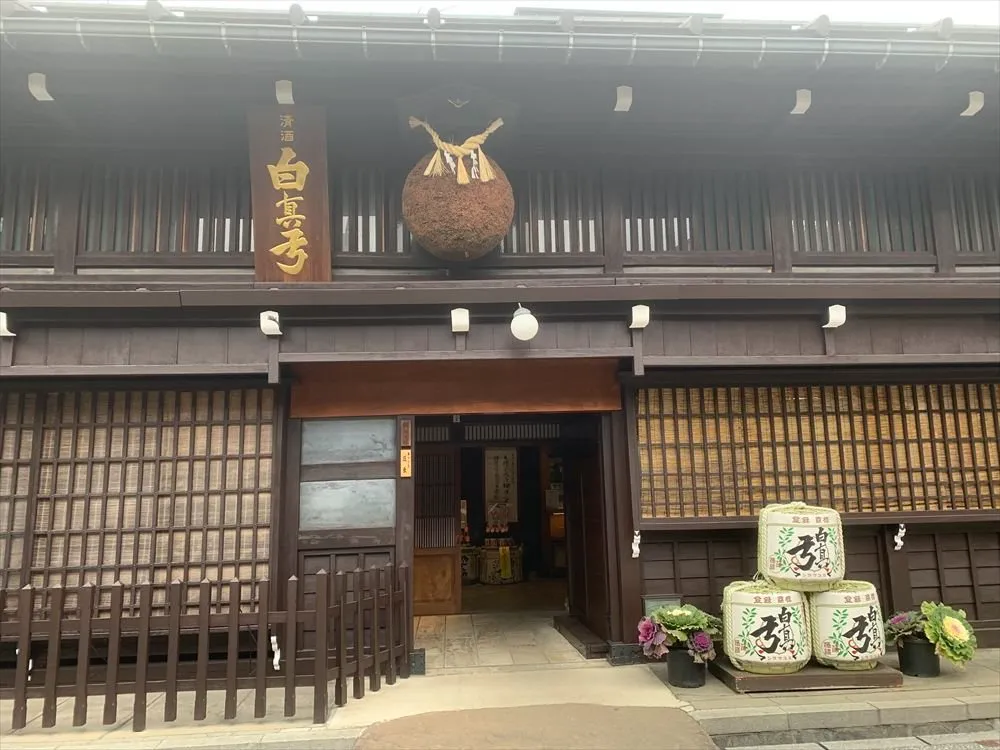
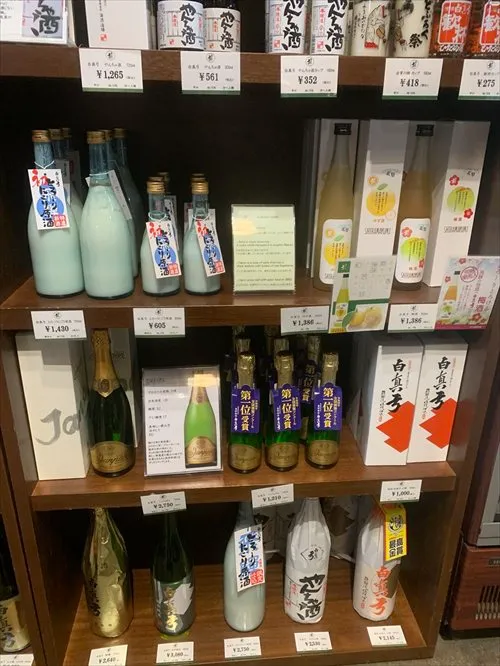
In Hida Furukawa, there are two sake breweries—Watanabe Shuzoten and Kaba Shuzojo.
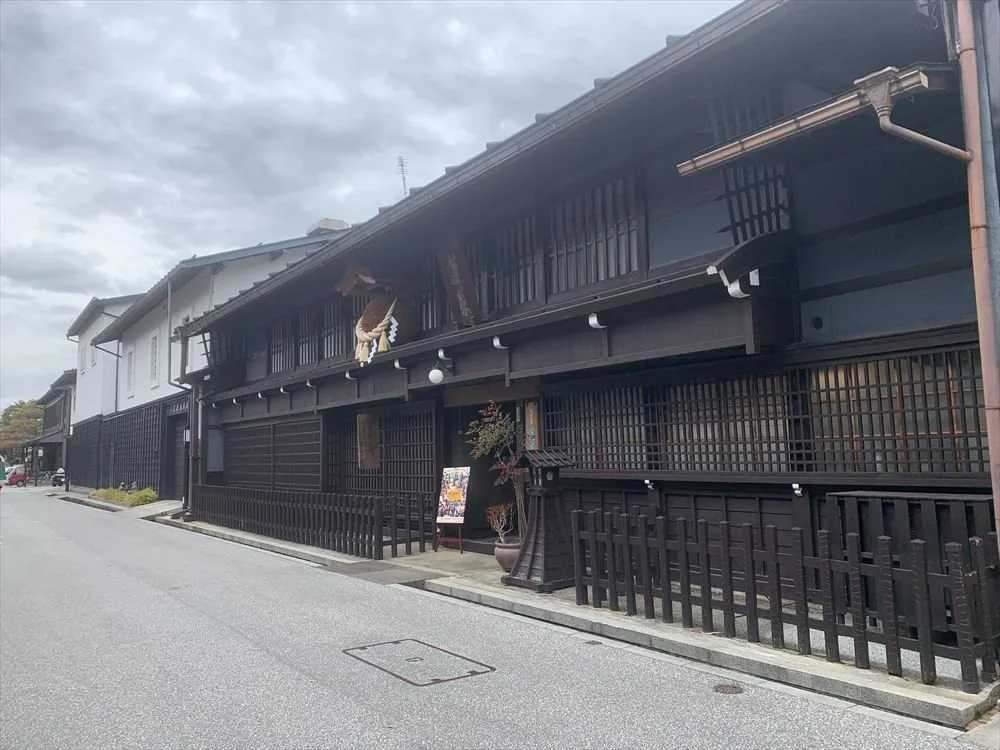
Their brewery buildings blend seamlessly into the town’s white-walled streetscape. Step inside, and you’re greeted by cool air and the gentle scent of wood, along with the quiet, refined atmosphere of long-established breweries.
Sake from these two breweries is often served at local events. “Hida cuisine tends to be quite salty with rich flavors,” a local tells me with a smile. “That’s why it pairs so well with sake.”
In Furukawa, sake is nothing out of the ordinary—it’s simply part of everyday life.
Watanabe Shuzoten
Kaba Shuzojo
From Peace & Quiet to the Peak of Passion
This tranquil town transforms completely in spring.
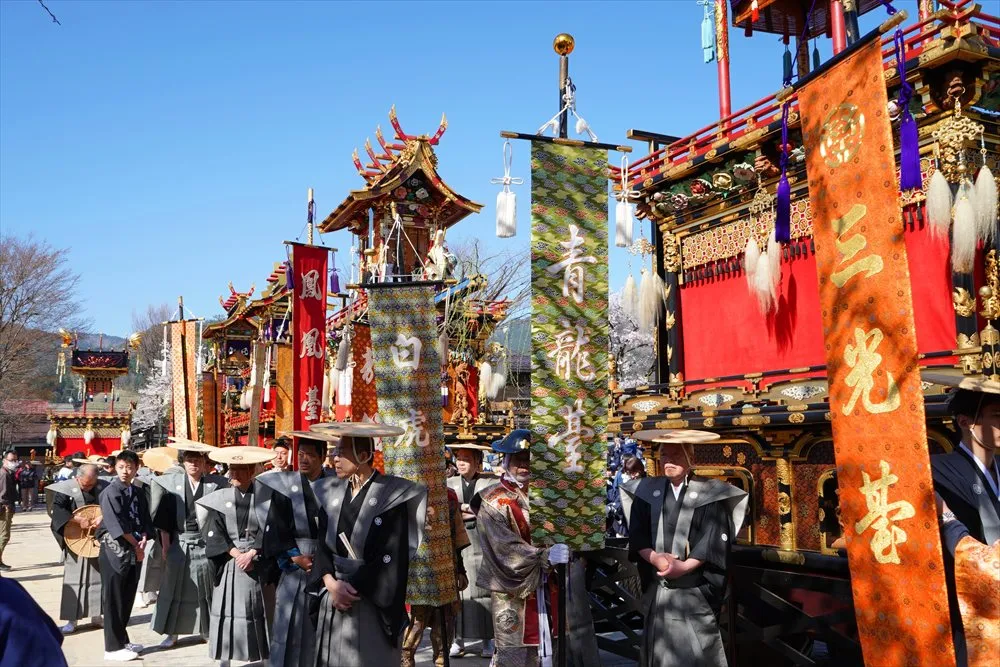
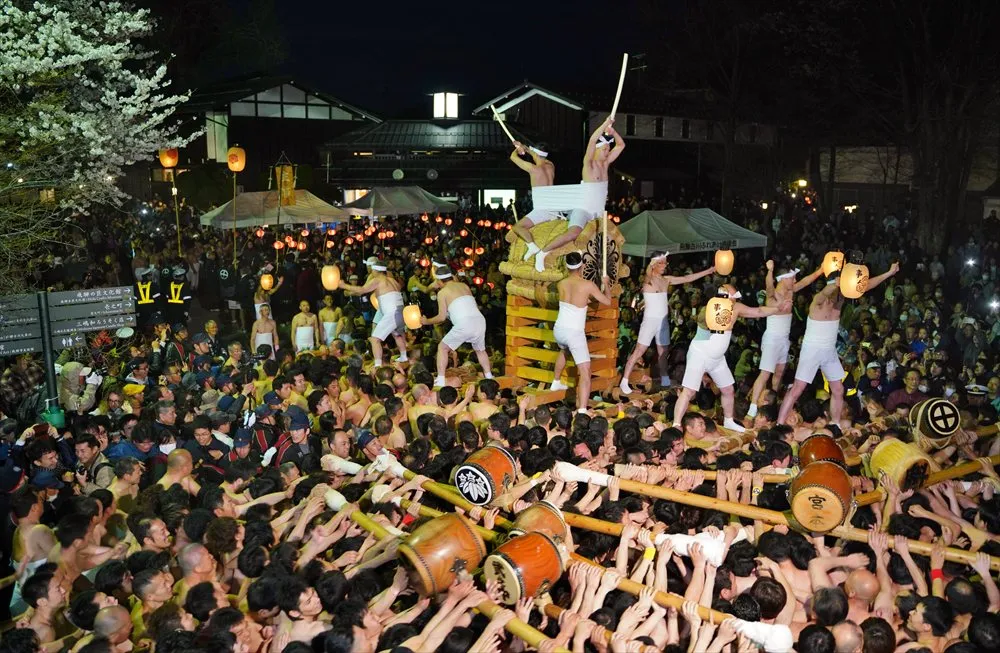
During the Furukawa Festival, held every April 19 and 20, the entire city comes alive with energy. Highlights include the beautifully decorated Yatai floats parading through the streets and the dynamic Okoshi Daiko drum performance.
At the Hida Furukawa Festival Exhibition Hall, you can experience this event throughout the year.
The quiet rhythm of everyday life punctuated by a burst of energy once a year. Perhaps it is this contrast that gives the town its unique depth.
Bonus for Anime Fans
This quiet town is also known as one of the inspirations for the anime “Your Name.”
Epilogue
Hida Furukawa is not a town filled with carefully staged sights for visitors. Its charm lies instead in the quiet beauty of everyday life.
Though close to well-known tourist destinations, time seems to flow a little differently here. And that sense of calm lingers long after the journey ends.
Travel Info
Access
By Highway Bus
Tokyo Sta. → 6 hr by highway bus → Hida-Furukawa Sta.
By Train
Tokyo Sta. → 1 hr 40 min by Shinkansen Nozomi → Nagoya Sta. → 3 hr by JR Limited Express Hida → Hida-Furukawa Sta.
Tokyo Sta. → 2 hr by Shinkansen Kagayaki → Toyama Sta. → 1 hr 15 min by JR Limited Express Hida → Hida-Furukawa Sta.
Former Editor-in-Chief, att.JAPAN Travels across Japan in search of its hidden charms, enjoying quiet moments with a cup of coffee while gazing at mountain landscapes.
飛騨市観光協会_R.webp)
 Masujima Castle Ruins (with remains of stone turret base and moat)