┃Sento as little museums of everyday life
After exploring the basics of sentō, their benefits, and their role within the community, I would like to conclude this series by inviting you to look at Japanese public baths from another perspective: that of art and architecture.
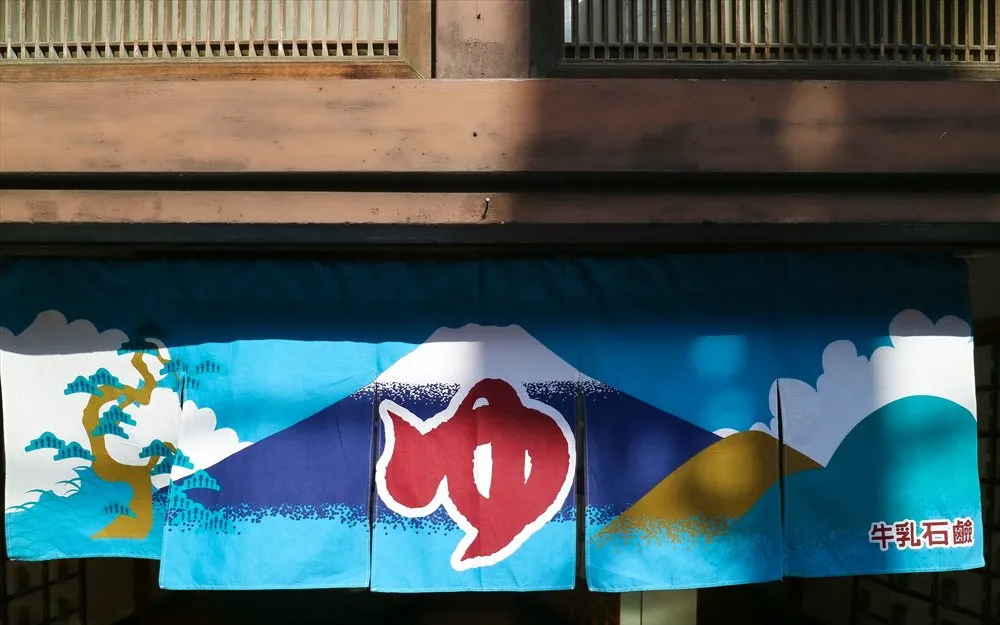
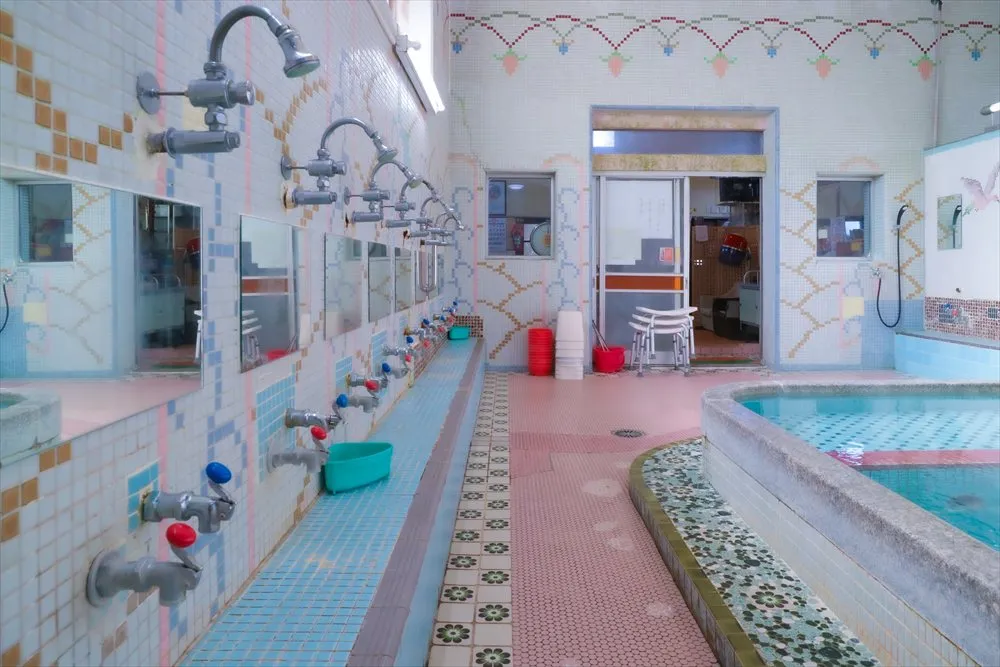
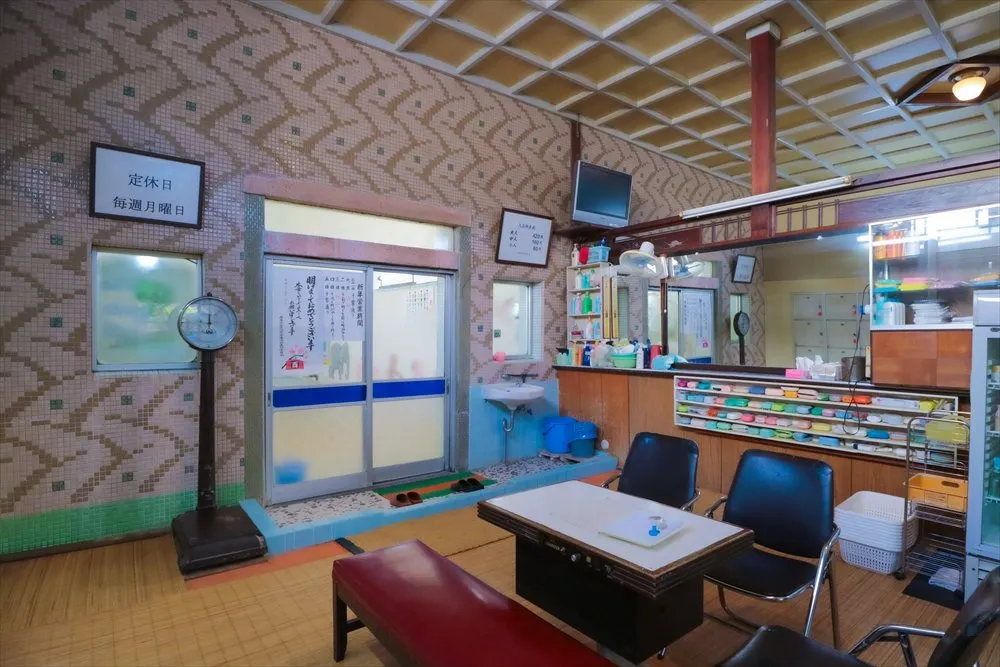
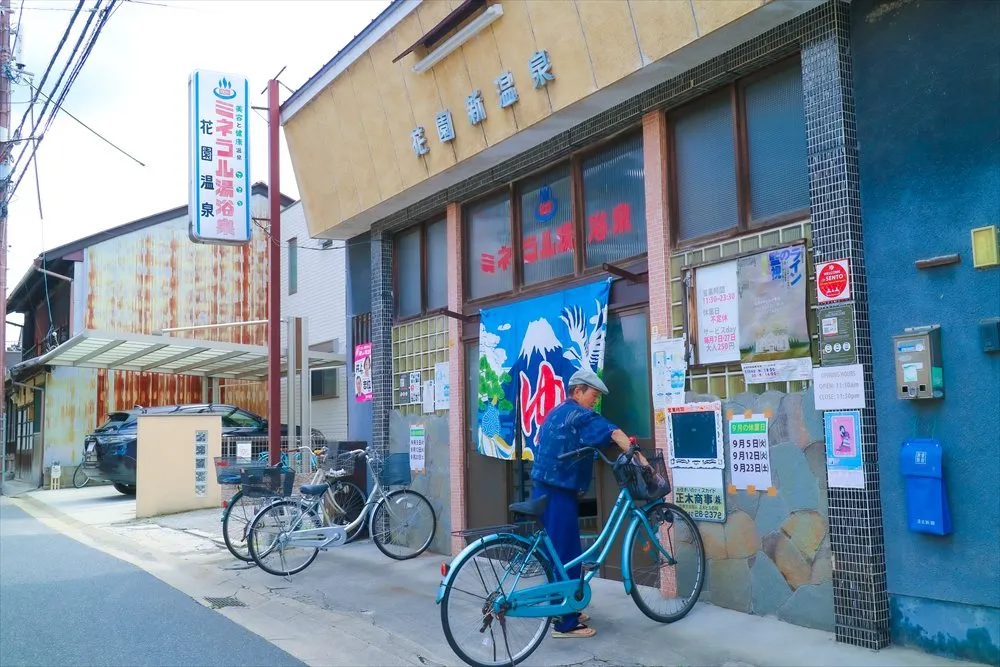
Sentō are not only places where people come to wash or relax. They are also true little museums of everyday life, where traditional architecture, mural paintings, mosaics, antique tiles, hidden gardens, and sometimes unexpected decorations all come together.
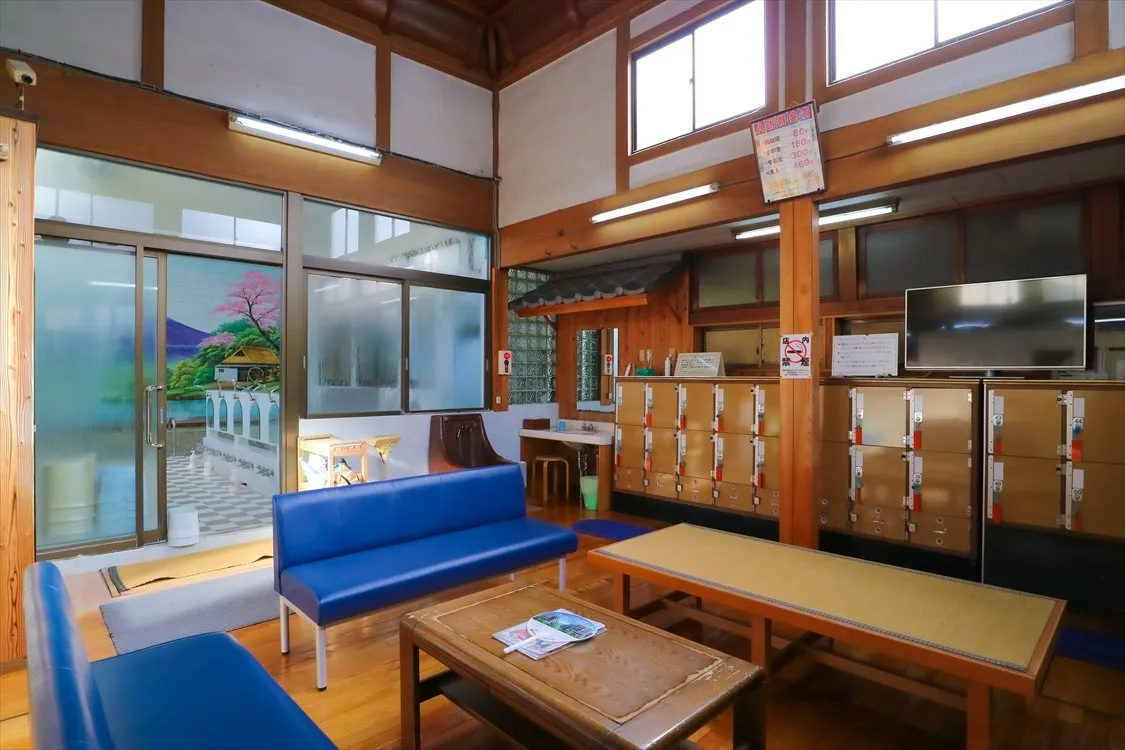
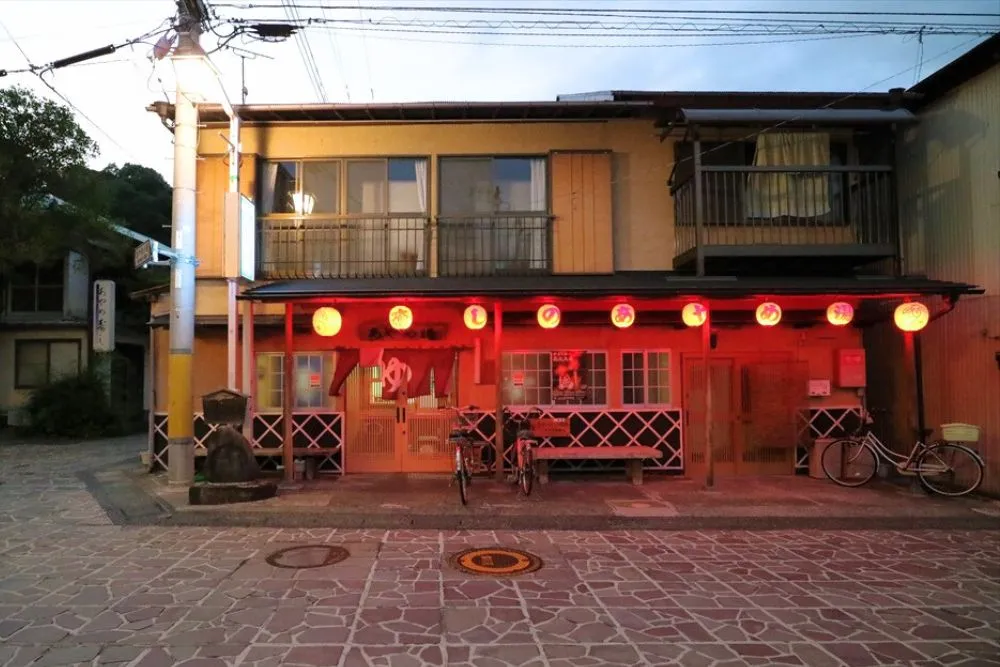
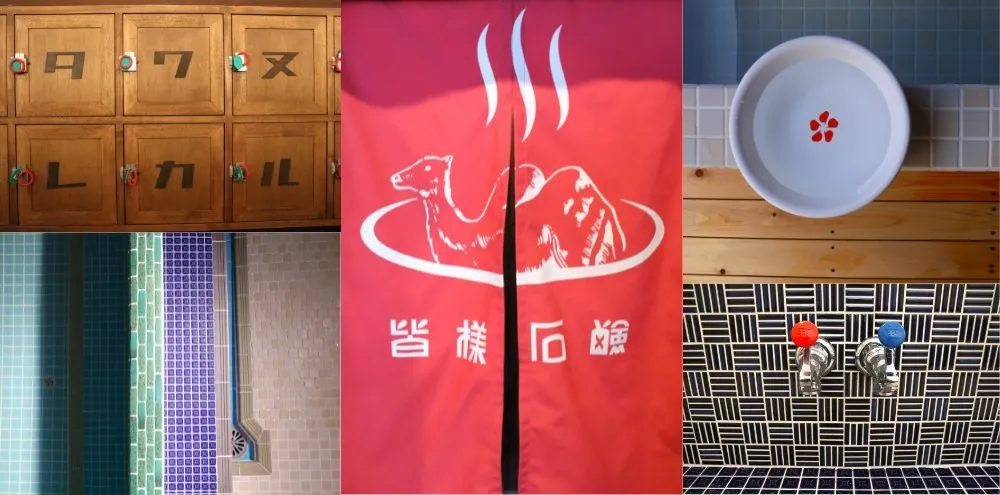
From the exterior of the building to the bathing area, including the changing rooms, floors, walls, and small decorative details, every sentō has its own unique atmosphere. After visiting many of them, I quickly realized that no two are ever truly alike.
I often find myself saying to owners, “These tiles are beautiful,” or “This mural is wonderful.” Sometimes they are proud and tell me the story behind them. Other times, they simply reply, “They’re just old things.” Yet these details often hold the memories of previous generations.
Here are a few artistic and architectural elements that can be appreciated in sentō.
┃Architecture
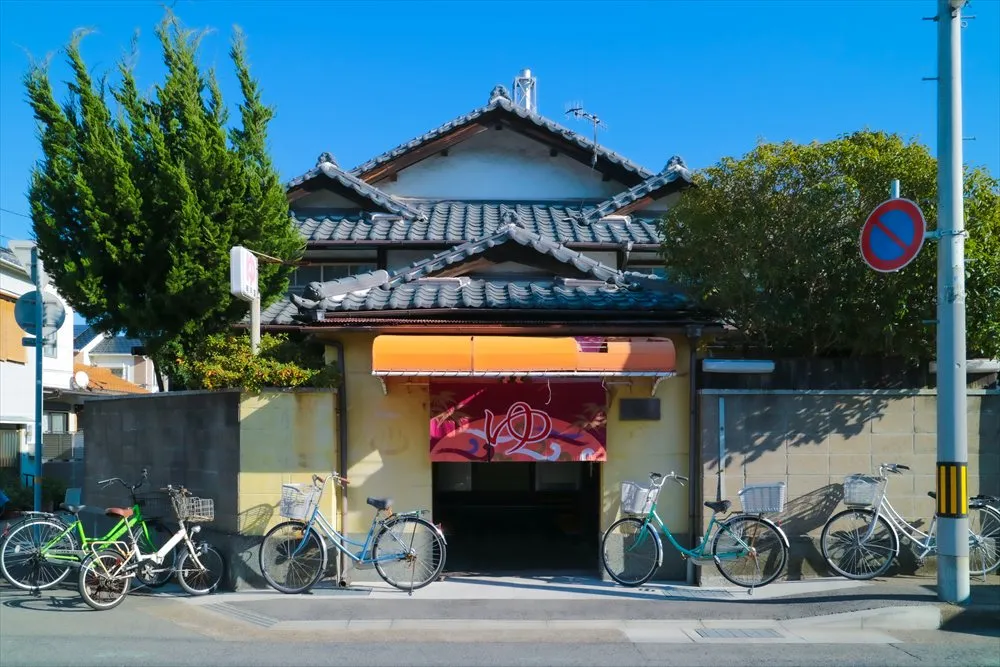
The architecture of sentō today is extremely varied. Since it has become difficult to support an entire family solely through the income of a public bathhouse, some owners have replaced the original building with apartment complexes in order to sustain the business through rental income.
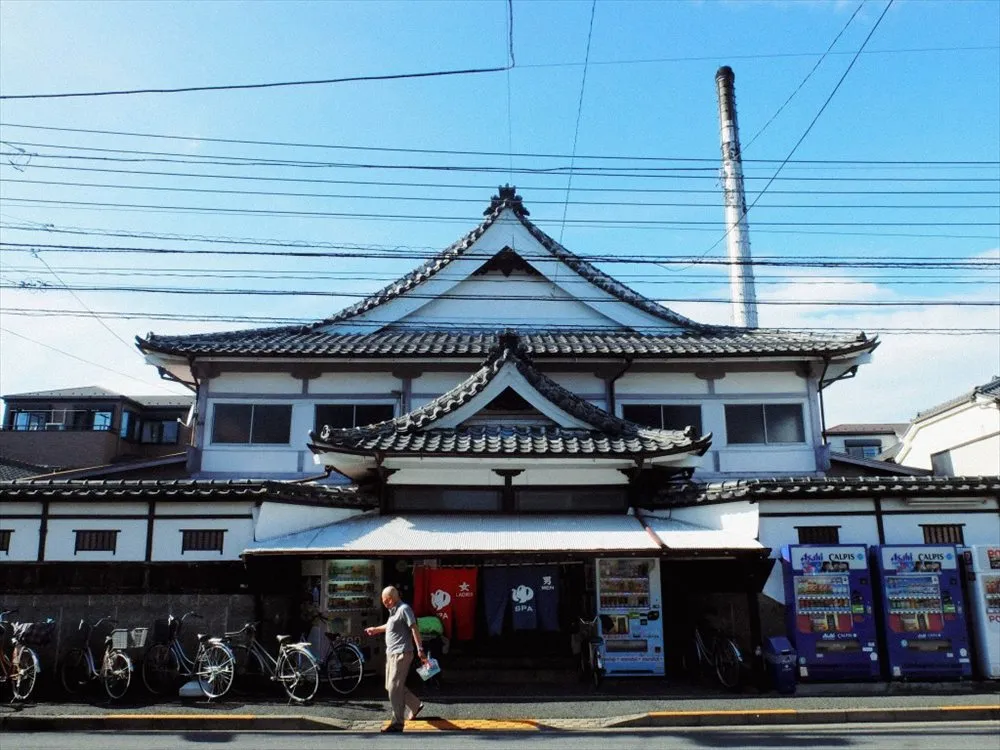
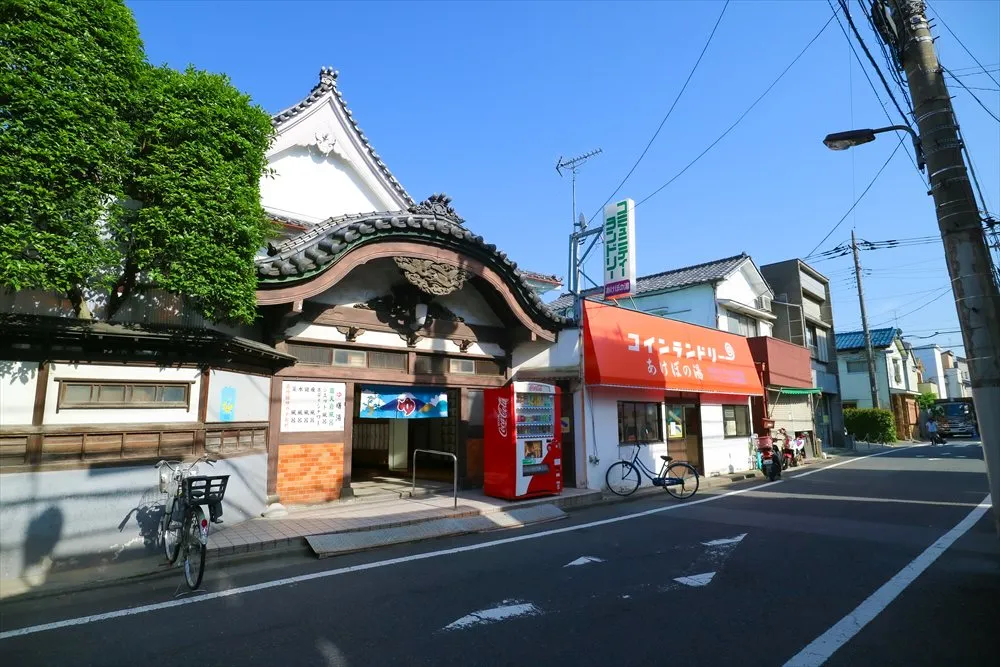
However, there are still some majestic traditional sentō built in the miyazukuri style. Their construction resembles that of temples. This influence dates back to the Great Kantō Earthquake of 1923. Because temples were associated with peace and serenity, people believed that bathhouses built in a similar style would bring comfort to residents. This is why such sentō are found mainly in the Kantō region.
The small pointed section resembling a central roof is inherited from Heian-period architecture and is called chidori hafu 千鳥破風. It can also take on a rounded form known as karahafu 唐破風, often decorated with wood or tile ornaments representing symbols such as cranes.
These sentō require significant maintenance, however. It is not uncommon for families, unable to bear these costs any longer, to sell the land to real estate developers. In their place, apartment buildings, convenience stores, or parking lots are often constructed.
The number of traditional sentō is therefore constantly decreasing, and many are now threatened with disappearance. If you have the chance to visit Japan, do not hesitate to experience them. Beyond the well-being they provide, your visit also helps support their survival.
There are, of course, many other architectural styles depending on the region and the establishment. You will discover some examples in the sentō presentations accompanying this article.
┃Penki-e mural paintings ペンキ絵
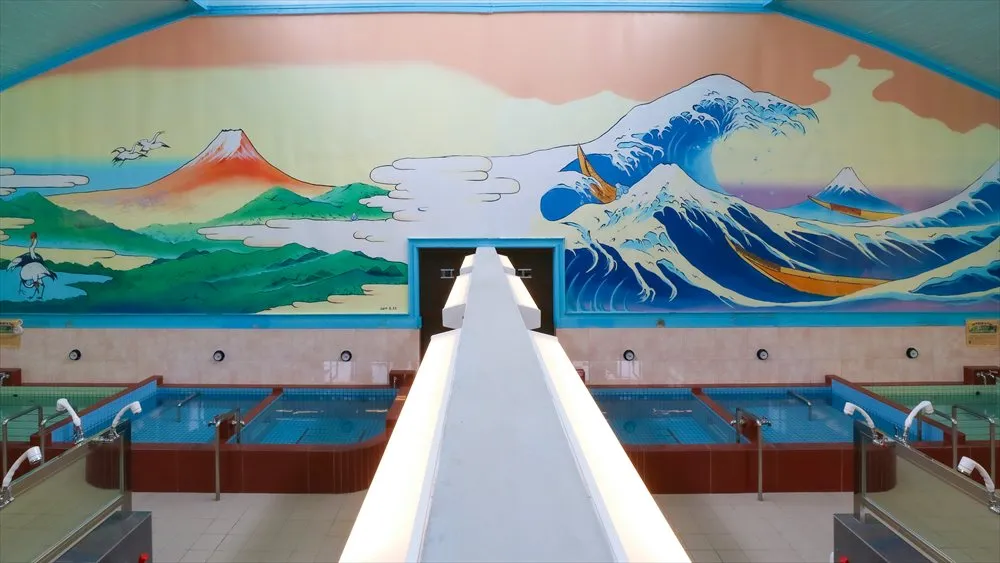
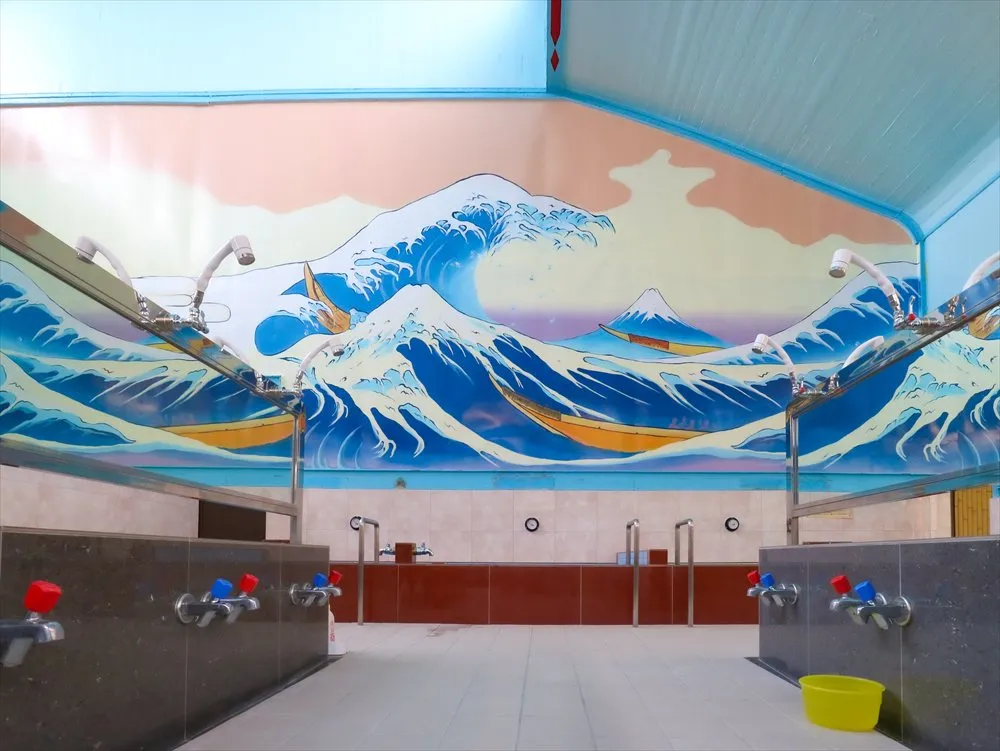
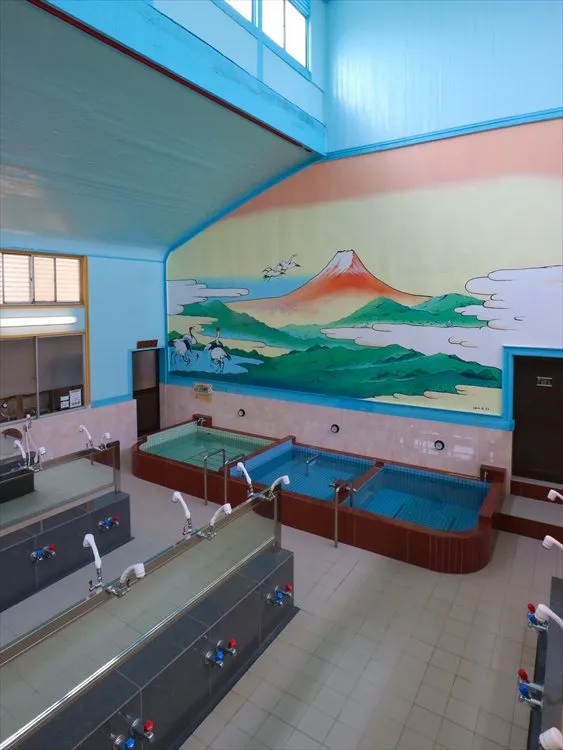
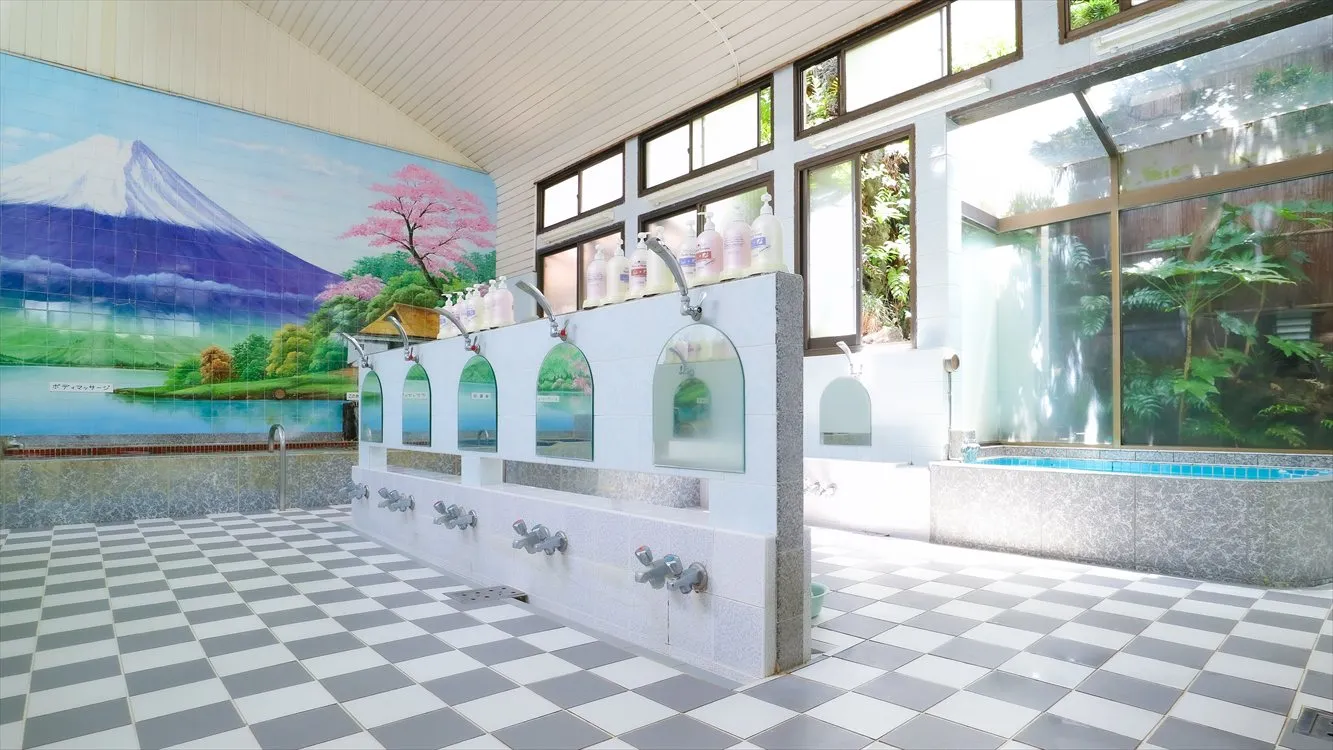
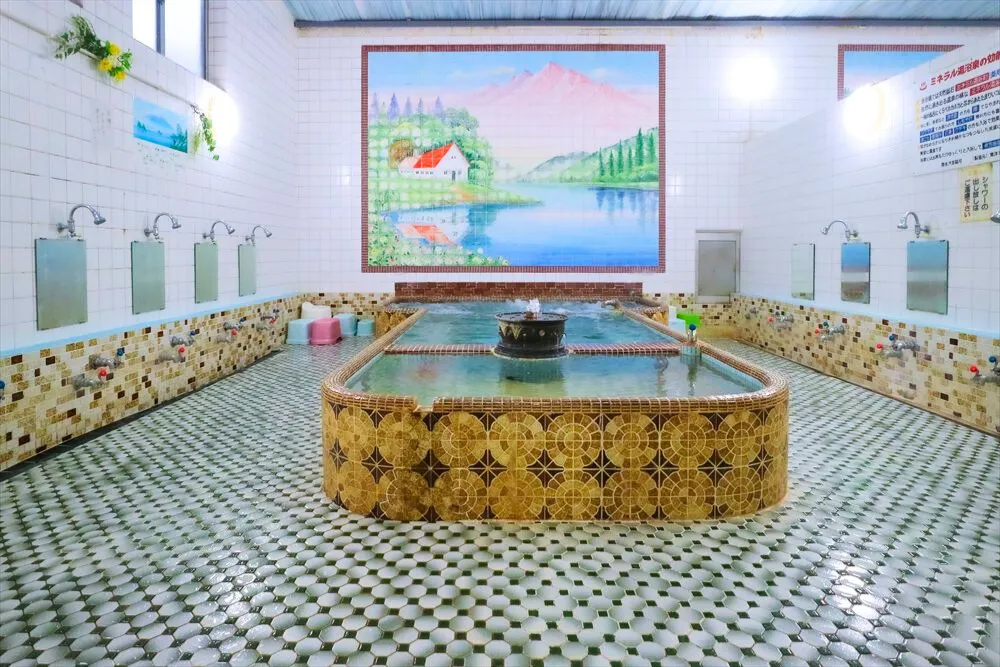
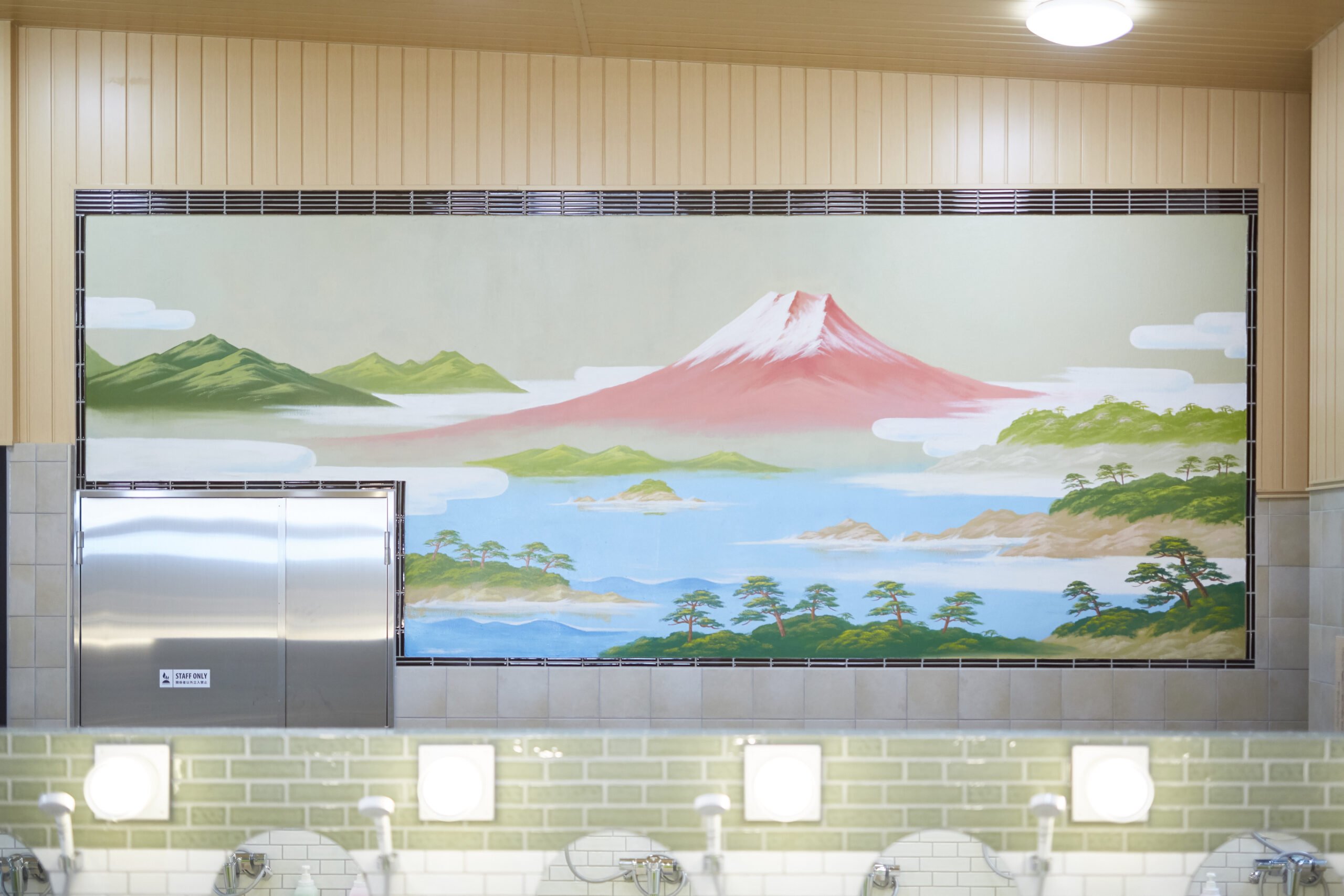
In some sentō of the Kantō region, one can admire a large mural painted on the wall at the far end of the bathing area. It very often depicts Mount Fuji.
The first Mount Fuji mural is said to have been painted in 1912 by the artist Kawagoe Kōshirō 川越広四郎 for the sentō Kikai-yu キカイ湯, now disappeared, located in Tokyo’s Kanda district.
At the time, sentō were highly frequented places and were also used by advertising companies to display advertisements in the bath and changing rooms. As a gesture of thanks, one of these companies once sent a painter to create a Mount Fuji mural to entertain children. The painting became an enormous success among both children and adults, and a new tradition was born.
Mount Fuji, a familiar and comforting symbol for Japanese people, became the most popular motif. However, one can also find a wide variety of Japanese landscapes and sometimes even European scenery.
Today, only a handful of painters continue this unique art form in Japan, among them Maruyama Kiyoto 丸山清人, Nakajima Morio 中島盛夫, and Tanaka Mizuki 田中みずき. One becomes a penki-eshi, a sentō mural painter, after many years of apprenticeship under a master.
Each of these artists has a very distinctive style. With a little experience, it becomes possible to recognize the author of a mural at first glance. I deeply admire their work and feel profoundly grateful for all the hours they allowed me to spend by their side.
Painting the murals for both the men’s and women’s baths generally takes an entire day, often during the sentō’s weekly closing day.
Since murals can be replaced relatively easily, the landscapes and colors sometimes change according to the owners’ wishes. In this way, they contribute to the living charm of sentō.
Certain motifs, however, remain rarely used because of Japanese superstitions. Red autumn leaves, for example, are often avoided because they fall, and the verb ochiru, “to fall,” is considered unlucky in business. Monkeys are also rarely depicted because saru can evoke the idea of “leaving” or “going away,” which could symbolically suggest losing customers.
┃Tiles and mosaics
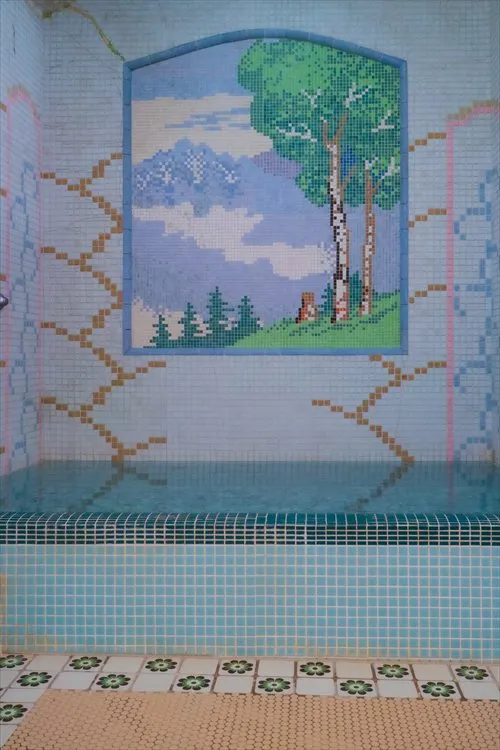
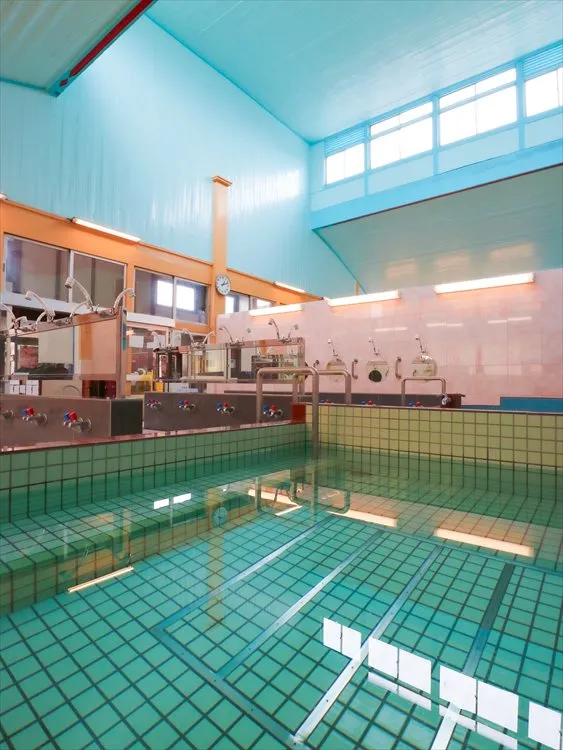
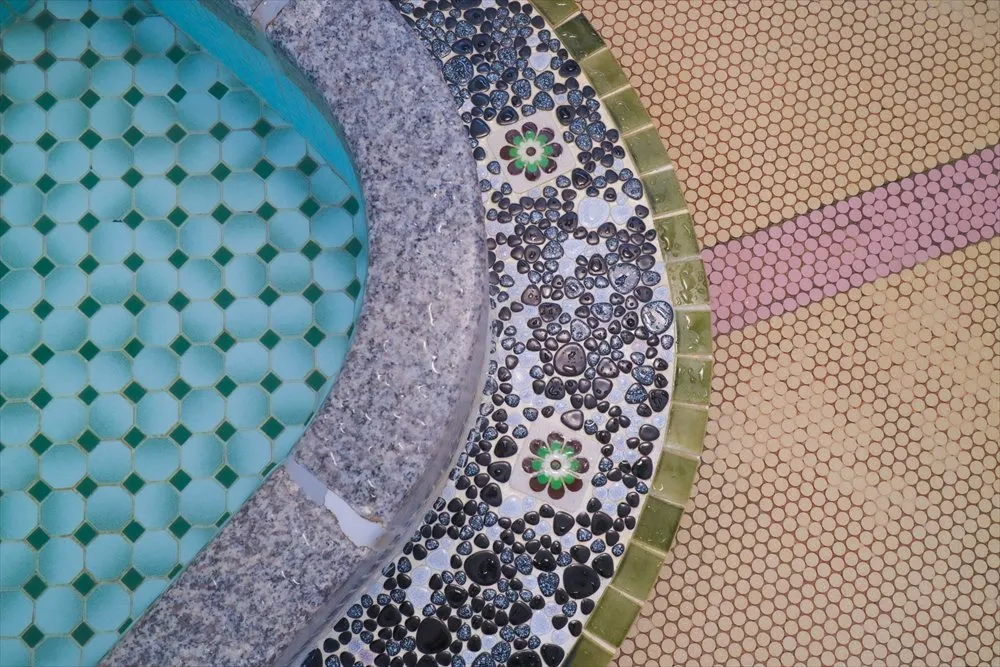
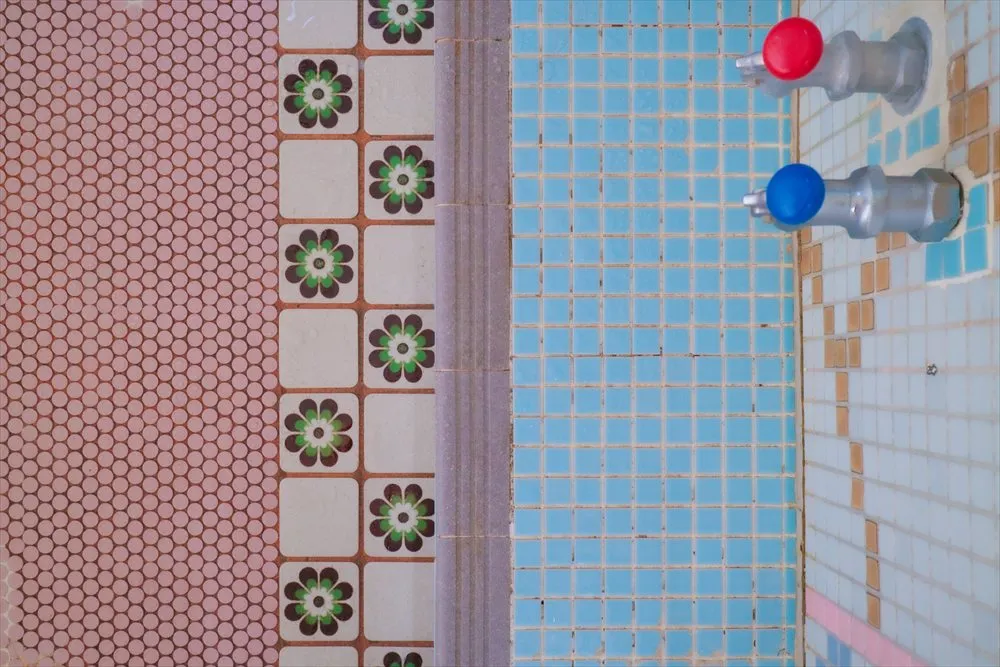
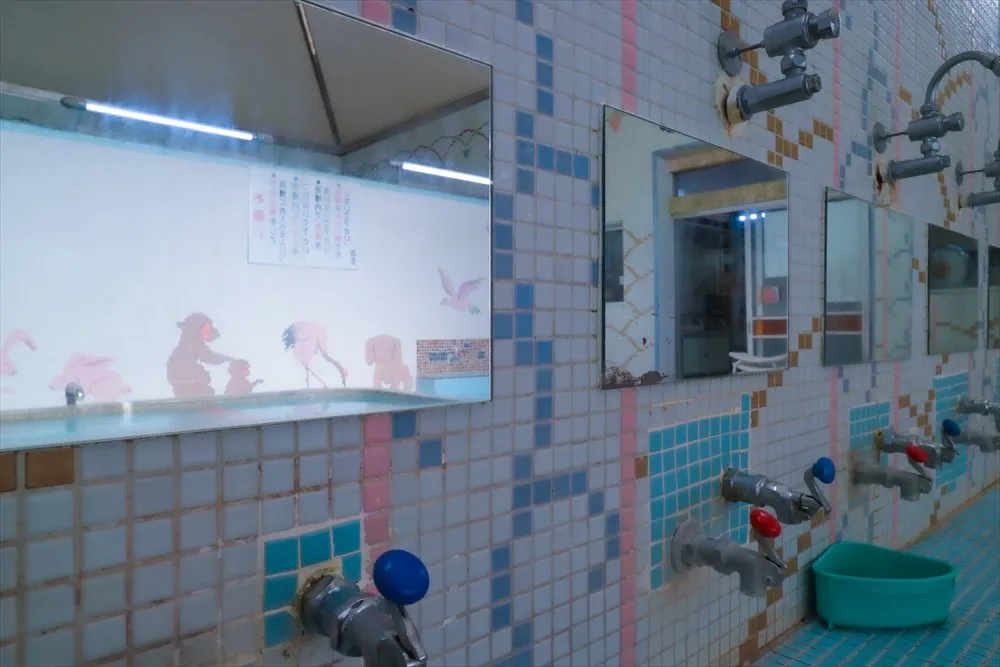
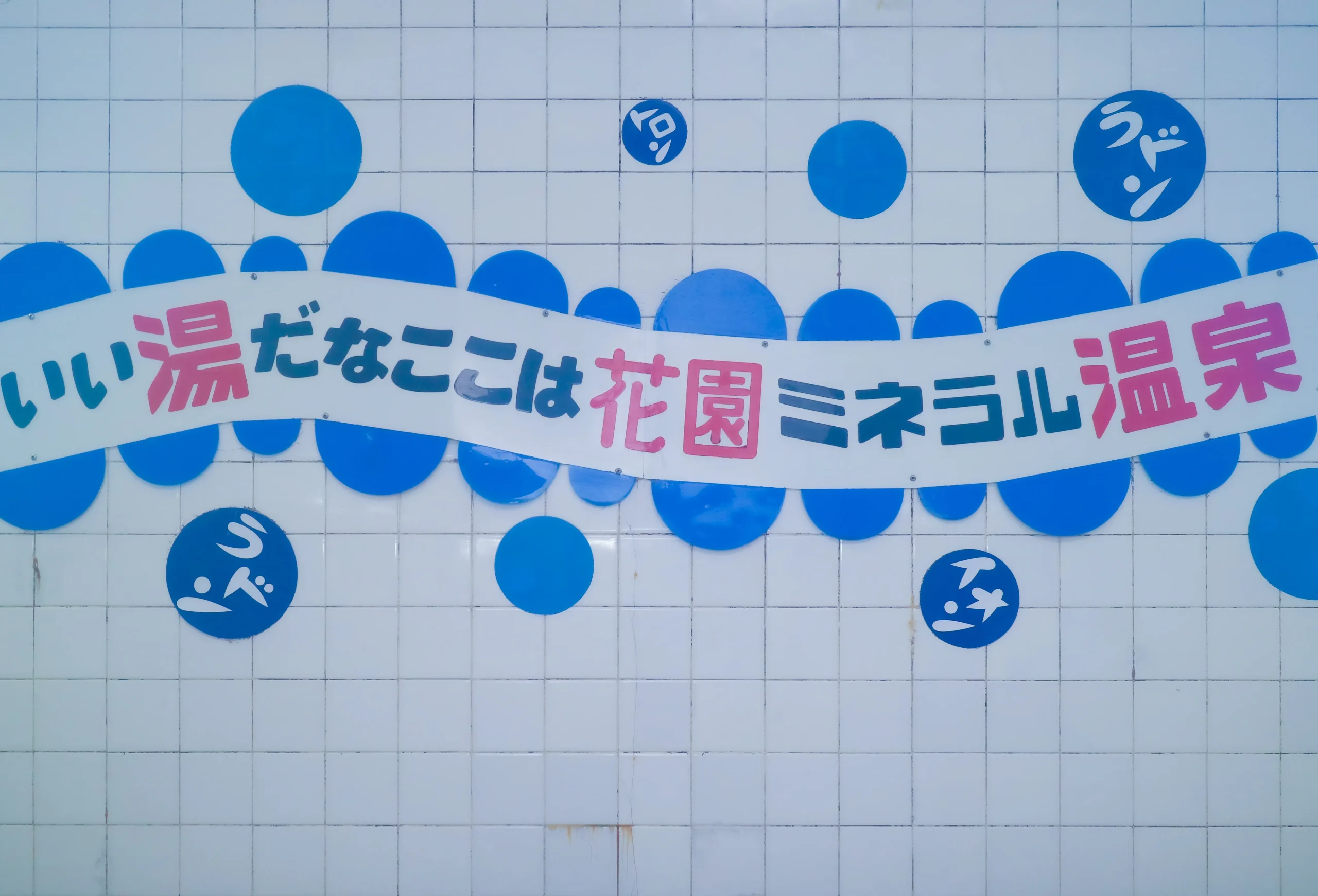
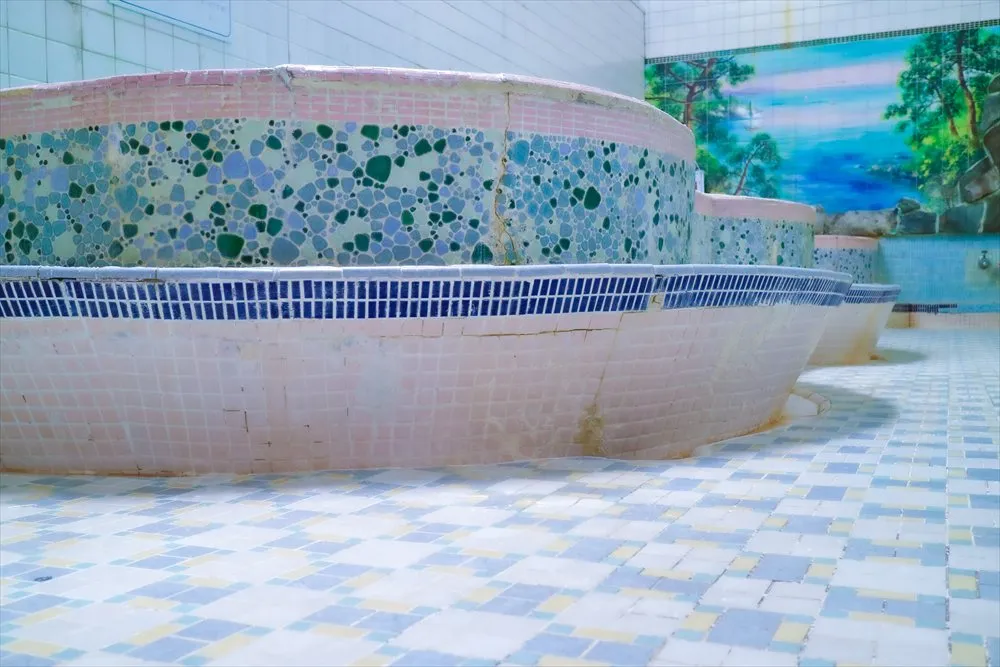
Mosaics, made from thousands of small ceramic tiles, allow for highly detailed and refined designs. They are very common in sentō, notably because they require less maintenance than penki-e murals. Unlike painted murals, which need to be redone every one to three years, mosaics withstand the passage of time and often date back several decades.
The chosen motifs therefore often reflect the tastes of previous generations. One can find natural landscapes, references to famous artworks, but also abstract compositions that can sometimes be quite surprising.
There are also kiln-fired paintings on tiles, which are similarly very durable. This technique is especially present in the city of Tajimi in Gifu Prefecture, which is also home to a beautiful tile museum.
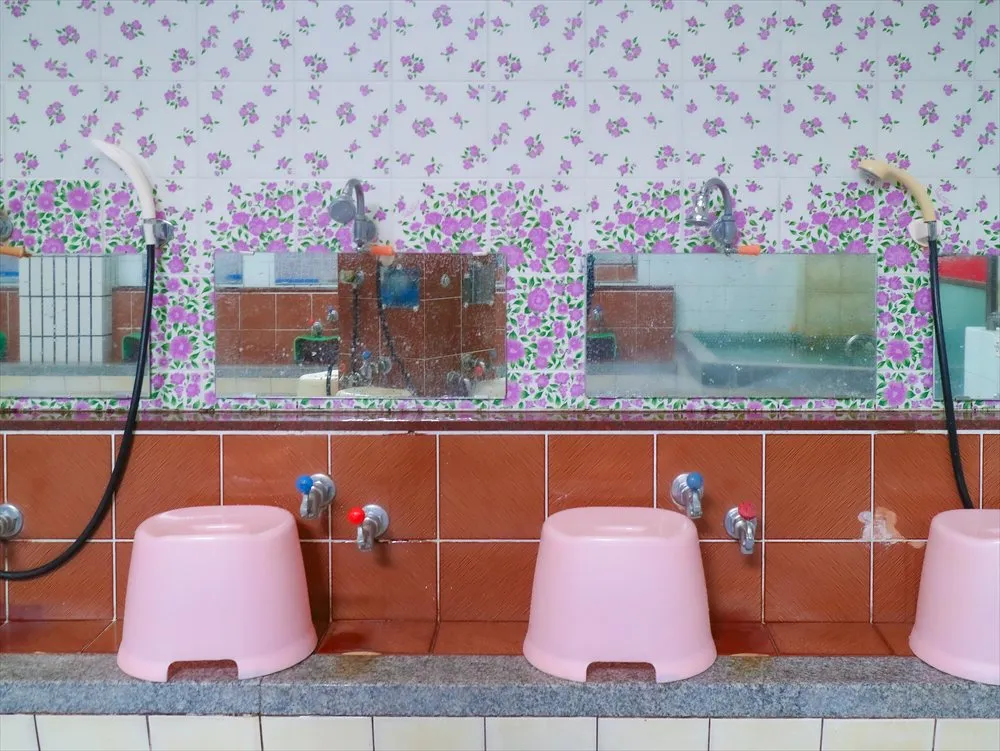
Even the floors themselves can be remarkable. Some tiles are true works of art, featuring patterns or colors that can no longer be found today.
┃Regional differences
Sentō also allow visitors to travel through the regions of Japan. From one area to another, there are differences in architecture, bath layouts, bathing customs, as well as in the decorations and artistic motifs chosen.
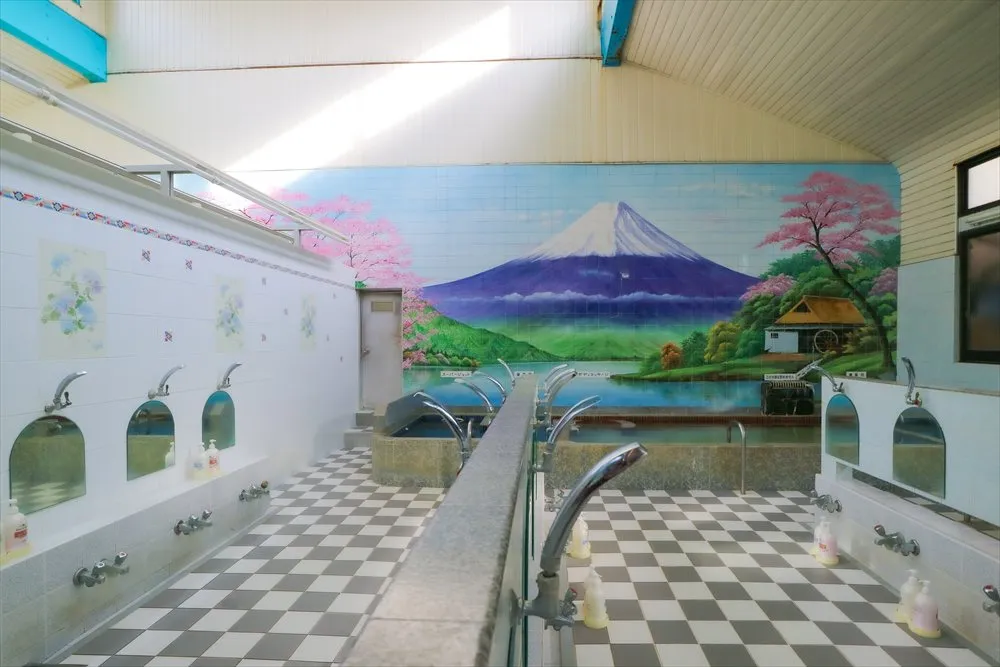
In Kantō, the bath is generally located at the back of the room against the wall. The shower stations are lined up in front of it, and bathers wash themselves facing mirrors before entering the water.
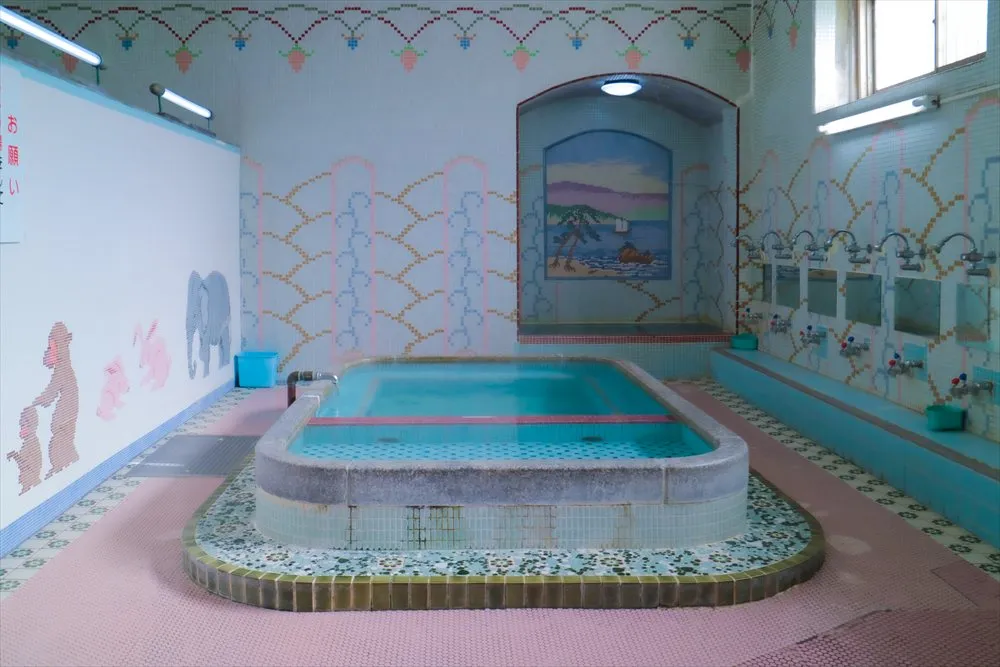
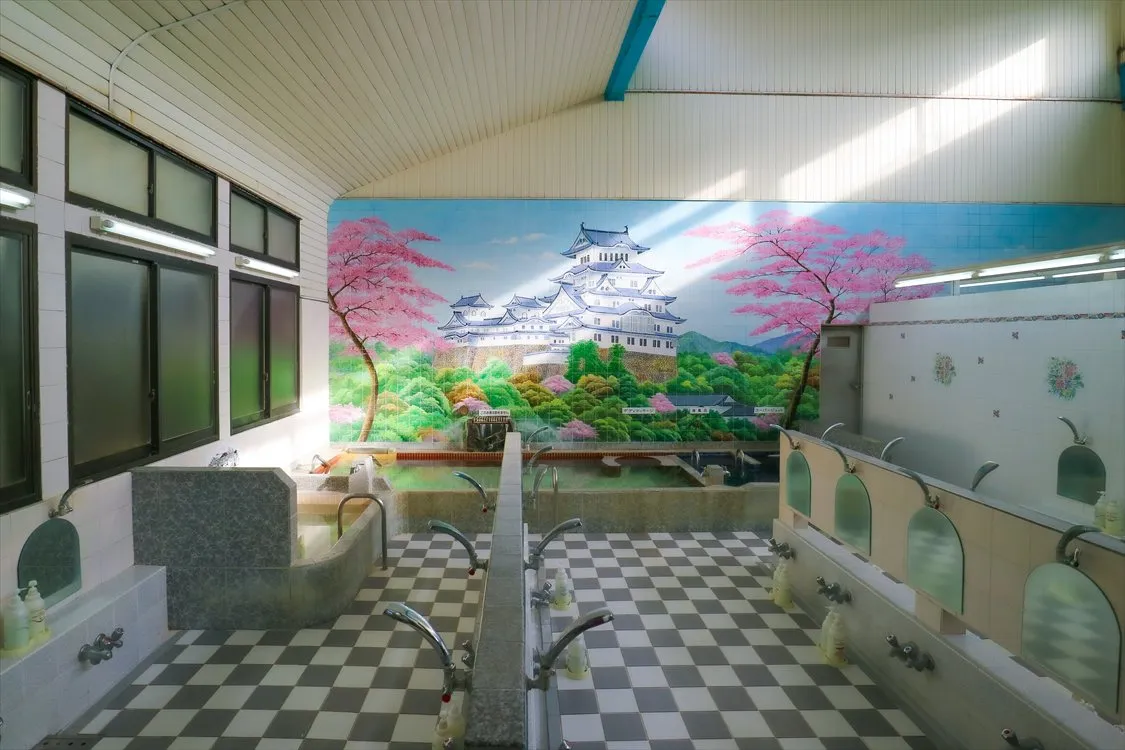
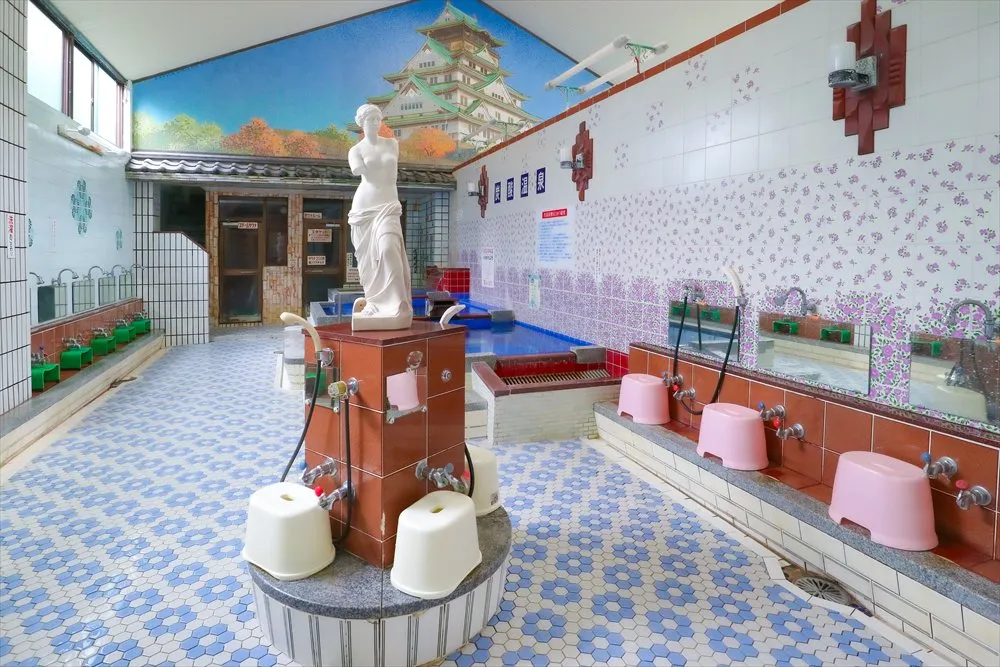
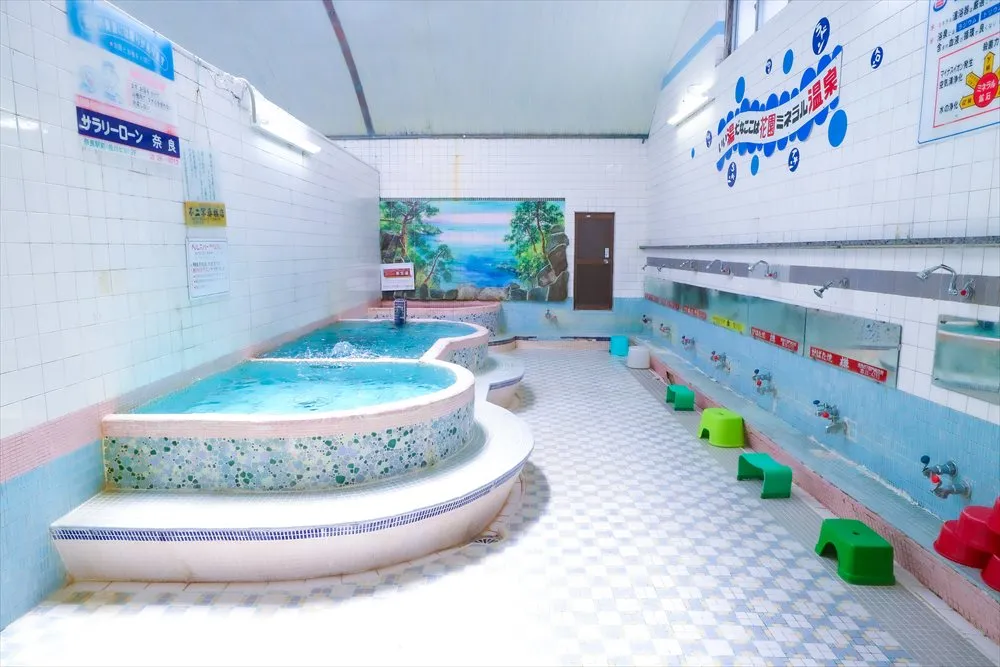
In Kansai, however, the bath is often located in the center of the room. It is sometimes surrounded by a raised edge where customers can sit and wash themselves by scooping bath water with a basin. This practice, very common in Kansai, hardly exists in Kantō, where taking water from the bath with one’s basin is generally considered poor etiquette.
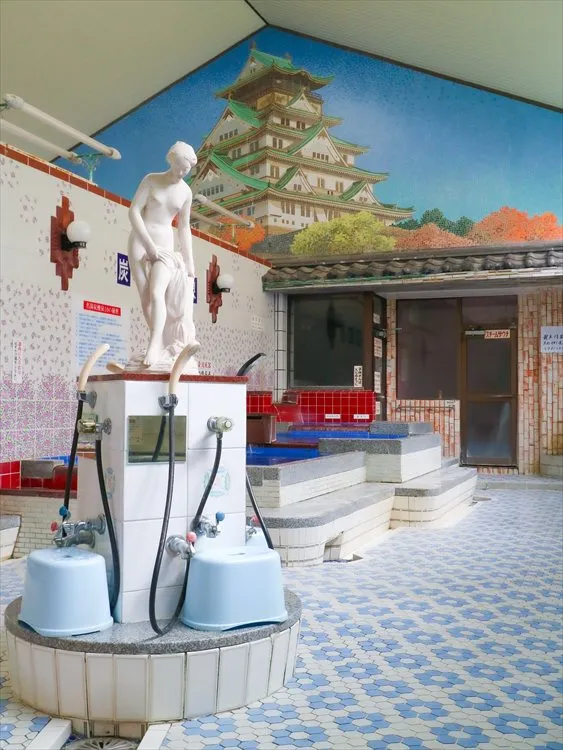
The differences can also be seen in the decorations. In the Kantō region, the large penki-e murals, often dedicated to Mount Fuji, are particularly emblematic. As one moves away from Tokyo, however, this motif becomes less systematic. Sentō may instead depict local scenery, nearby mountains, the sea, a famous castle, a volcano, or symbols unique to their own region.
In Kansai and western Japan, one encounters more tile decorations, colorful mosaics, kiln-fired tile paintings, and whimsical compositions. Some sentō almost feel like dreamlike worlds, featuring animals, flowers, European landscapes, or abstract motifs. Others pay tribute to their city, with castles, shrines, or local scenery dominating the bathing room.
Each region, each city, and each establishment reveals a different way of experiencing the bath. This is also what makes sentō so precious: they are never merely places to wash oneself, but spaces where local customs, family memories, craftsmanship, and imagination all intertwine.
┃Engawa and small Japanese gardens
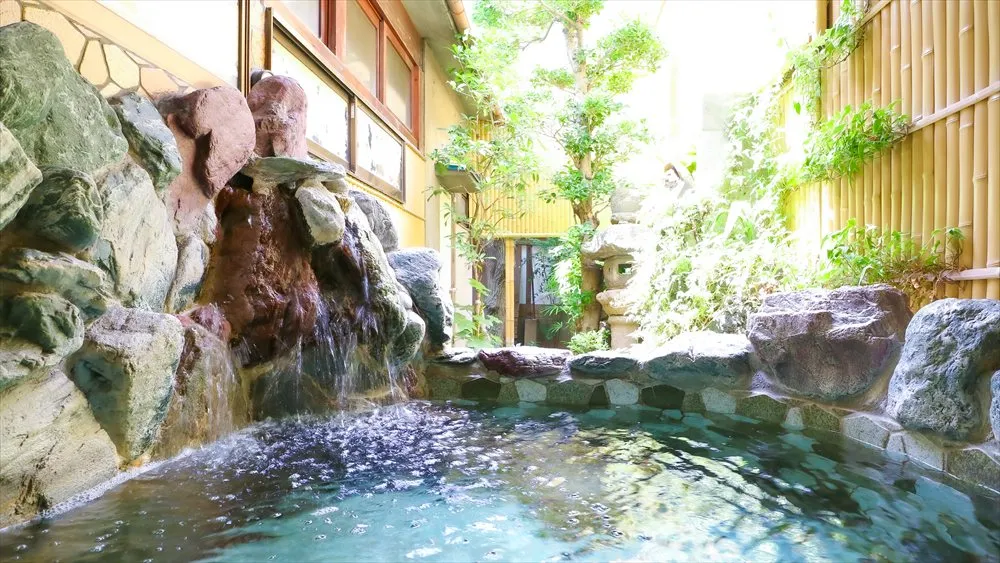
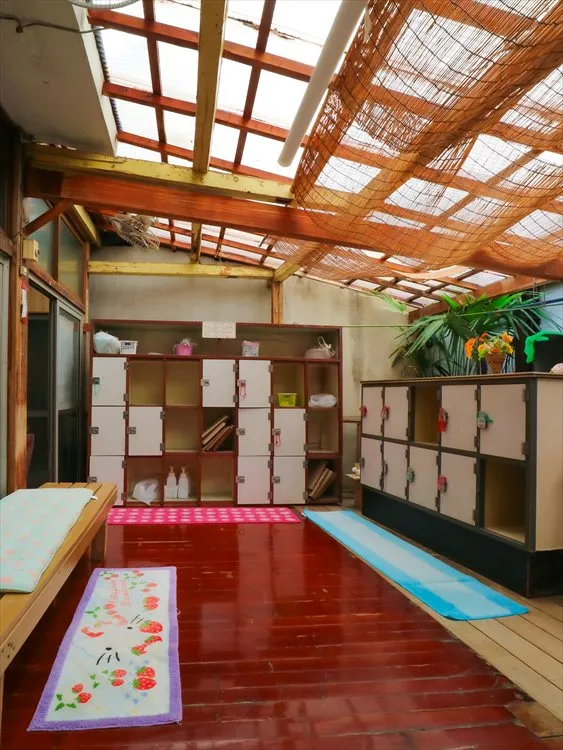
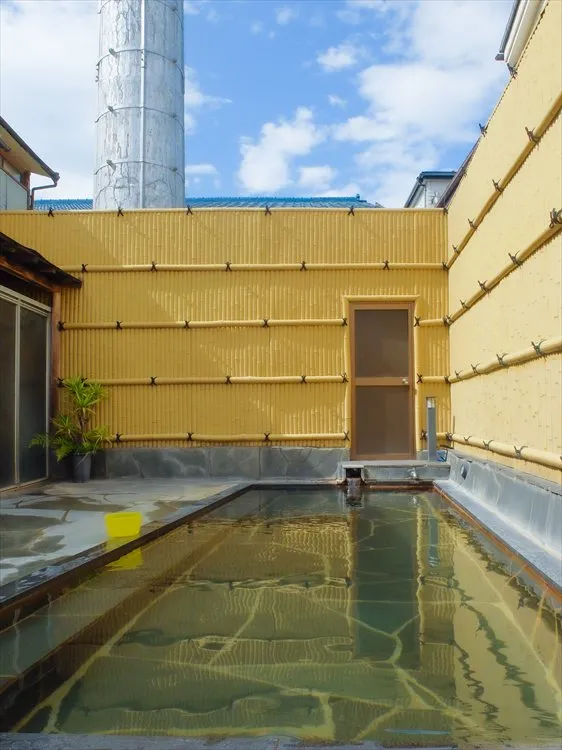
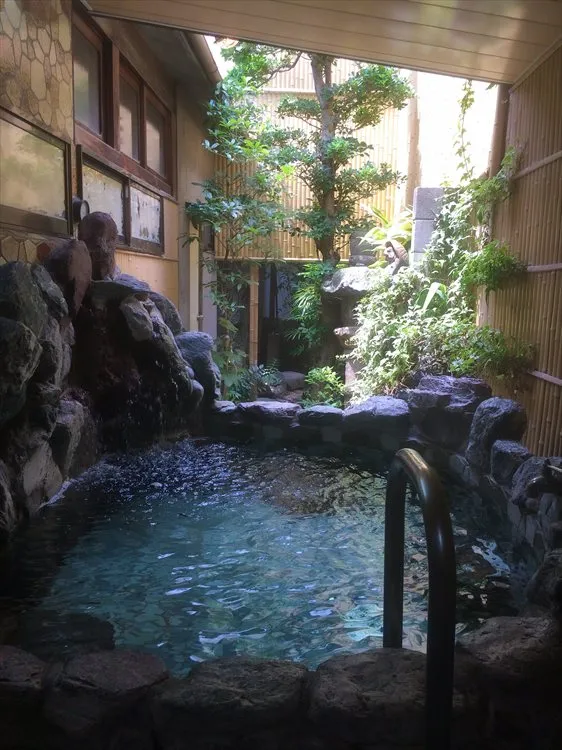
Sometimes magnificent Japanese gardens are hidden within sentō. They may be visible from the changing room or from the bath itself, allowing visitors to intimately appreciate the beauty of the seasons.
These small, often discreet gardens add a contemplative dimension to the experience. After the warmth of the bath, simply glimpsing a maple tree, a few stones, a lantern, or a fragment of greenery can create a deeply peaceful moment.
┃Renovations, exhibitions, and contemporary sentō
Even today, sentō continue to evolve. When machinery or plumbing systems need renewal, some owners take the opportunity to modernize the interior or exterior of the building. In recent years, some architects have specialized in these renovations, seeking to preserve the spirit of the sentō while adapting it to contemporary tastes.
These renovations often attract younger generations who may feel reluctant to visit baths with an overly old-fashioned appearance. Some sentō thus become places where visitors can enjoy both public bath culture and refined contemporary Japanese design.
Other establishments use their spaces to organize exhibitions or collaborate with local artists. This is the case, for example, with Daikoku-yu in Oshiage, or Kosugi-yu in Kōenji, which regularly exhibits artists in its lobby. Midori-yu in Jiyūgaoka even has its own small art gallery in a neighboring building.
These initiatives show that sentō are not merely places of memory. They remain living spaces, capable of reinventing themselves while preserving their soul.
┃To conclude this series
For this final article in the series, I would like to invite you to observe sentō carefully. Look up toward the roofs, pay attention to the tiles, murals, mosaics, hidden gardens, and the small details that may at first seem modest.
Behind every decoration lie choices, memories, the gestures of artisans, and the story of a family or a neighborhood. Perhaps this is where one of the greatest beauties of sentō resides: in this discreet way of allowing everyday life, art, and memory to coexist.
Personally, I have no preference between traditional, vintage, or modern sentō. I appreciate them all, and I believe this diversity is part of their richness. Some days, I long to immerse myself in an old-fashioned atmosphere, almost outside of time. Other times, I prefer the comfort of a contemporary interior, bright and minimalist.
I therefore encourage you to try different kinds of sentō in order to gain a broader understanding of this precious Japanese culture.
To fully enjoy the experience, I also recommend taking a look at the etiquette guidelines mentioned in a previous article.